

Teaching 11th Grade Math in Homeschool: Algebra 2, Big Goals, and Looking Ahead

By the time you begin teaching 11th grade math in your homeschool (or 11th grade in general), the subjects often feel a little heavier academically—not to mention how you feel emotionally. After all, your “little boy (or girl) is growing up.” Your student is no longer just “doing school.” They’re inching closer to adulthood, independence, and yes … college or career decisions.
And right in the middle of all that sits Algebra 2.

If that makes you want to pour another cup of coffee (or tea) before opening that oh-so-intimidating algebra 2 textbook, you’re not alone. Plenty of homeschool parents have dealt with this before … or are dealing with it as we speak (or, as I write).
The good news? Teaching 11th grade math doesn’t have to feel overwhelming. With the right support and tools, as well as realistic expectations, Algebra 2 can be manageable—and even confidence-building—for both you and your student.
What Is Typically Covered in 11th Grade Math?
For many homeschoolers, Algebra 2 is the standard 11th grade math course. It builds directly on Algebra 1 concepts, adding more depth, abstraction, and problem-solving.
Common Algebra 2 topics include:
- Linear equations and inequalities
- Quadratic equations and functions
- Polynomials and factoring
- Rational and radical expressions
- Exponential and logarithmic functions
- Systems of equations
- Introductory trigonometry concepts
- Word problems that require multi-step reasoning
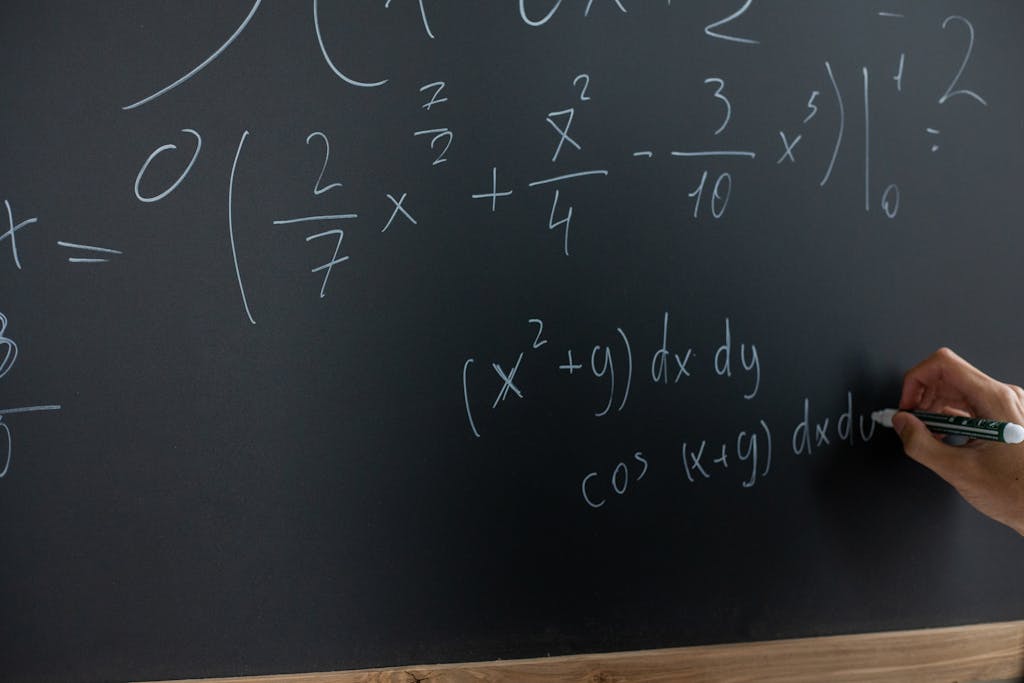
This is often the year where math becomes less about memorized steps and more about thinking mathematically—recognizing patterns, choosing strategies, and applying concepts across different problem types.
That leap can feel challenging, especially if math has never been your teen’s (or your) favorite subject.
Why Algebra 2 Matters (Especially for College Prep)
If your student is college-bound—or even college-curious—Algebra 2 is an important milestone. Most colleges expect applicants to have completed the following:
- Algebra 1
- Geometry
- Algebra 2
Even students planning to attend community college may be placed into courses based on Algebra 2 readiness. A solid foundation here can make future math classes (and placement tests) far less stressful.
Having said that, though, don’t worry that your 11th grader has to ace Algebra 2 or her future educational path will be ruined. (I assume I’m not the only mom who jumps to worst-case scenarios in my head on a regular basis.) Perfection is not the goal; don’t do that to yourself or your student. Instead, encourage competency and confidence.
Seriously, colleges are far more interested in a student who understands the concepts reasonably well than one who rushed through advanced math without mastering the basics.
So, let’s talk about some practical goals and tips for teaching 11th grade math to your teenager.
Tips for Teaching Algebra 2 at Home
1. Focus on Mastery, Not Speed
This is not the year to rush. It is completely fine if Algebra 2 takes longer than expected or requires frequent review. Many students benefit from slowing down and truly understanding why the math works.
(And if the “math isn’t mathing” for your student, it’s a pretty clear sign that the understanding isn’t there. If this is the case, don’t move forward until the current concept is understood, as these concepts are built on each other and a solid foundation is necessary.)
2. Encourage Questions (Even the “Simple” Ones)
Algebra 2 builds layer upon layer. If your student is confused early on, those gaps will grow. Encourage those questions (and do your best to answer them … hint: it’s okay if your answer is “I don’t know; let’s figure it out together).
Revisit previous lessons as needed, especially for concepts that were more of a challenge. If you’re doing a video-based curriculum, re-watch those explanations as often as necessary. Repetition is the law of memory, and practice makes proficient.
3. Use Real-World Connections When Possible
If your teenager is anything like mine, you probably hear, “When am I ever going to use this?” on a daily basis. So, help them make those connections (even if it takes a bit more time to find them, it’s worth it).
Exponential growth, systems of equations, and functions show up in science, economics, technology, and everyday decision-making. Even helping your student make small connections can help those abstract ideas feel more down-to-earth and meaningful.
Outsourcing Math Help Is Not Failing
Let’s say this clearly: you do not have to teach Algebra 2 alone.
Many homeschool parents reach a point—often around 10th or 11th grade—where outsourcing math instruction becomes not only helpful but wise. This does not mean you are incapable. It means you are prioritizing your student’s education by getting him or her the help and support that’s needed.
One curriculum that works especially well for this stage (and honestly, any stage of homeschooling math!) is CTCMath.

Why Many Homeschool Families Choose CTCMath
CTCMath offers:
- Clear, short video lessons
- Step-by-step explanations that students can rewatch
- A full Algebra 2 course aligned with high school standards
- Automatic grading and progress tracking
- Flexibility for independent learners
For a student doing 11th grade math, this kind of independence is key. They can take ownership of their learning while still having structured, reliable instruction. After all, it’s not going to be much longer before your teenager will need to take full responsibility of his or her learning when college comes into view.
You, as a homeschooling parent, can step into more of a supportive and “accountability partner” role rather than feeling the pressure to explain every concept. Not only will that take a load off your shoulders (especially if you’re simultaneously teaching other children), but it will be another step in helping your student grow and mature.
CTCMath can also be a great bridge for students preparing for college-level expectations, where lectures and independent study are the norm.
Supporting Your Student as College Comes Into View
Math in 11th grade doesn’t merely involve equations—it also requires preparation (and if your son or daughter is considering moving away from home for those college years, this preparation takes on an emotional weight that is sometimes unexpected–speaking from honest experience here).
This is often the year when homeschool families begin to:
- Research colleges or career paths
- Think about entrance exams (SAT, ACT, or placement tests)
- Discuss transcripts and graduation requirements
- Identify strengths and areas that need reinforcement
While it can feel like a lot for you, remember that your teenager is also likely feeling uncertainty or possibly even overwhelmed by the options and path ahead. Here are a few ways that you can support your student during this season:
Keep Perspective
Not every student needs advanced math beyond Algebra 2. A strong Algebra 2 foundation is often more valuable than rushing into Pre-Calculus or Trigonometry without confidence. Unless it’s a STEM field your student is planning to pursue, those advanced courses can likely wait until college.
Encourage Responsibility
This is a great year to help your teen manage deadlines, track assignments, and ask for help proactively—skills they will absolutely need in college. (You might even toss in some life skills like laundry and cooking while you’re at it … just saying.)
Recognize Progress, Not Just Performance
While 11th grade math can be challenging for both student and teacher, it doesn’t have to be impossible. Celebrate your teen’s perseverance, improvement, and effort—not just his correct answers.
You’re Doing Better Than You Think
Teaching 11th grade math in homeschool can feel intimidating, especially when college starts looming on the horizon. But the fact that you are thoughtfully choosing a curriculum, seeking support, and encouraging your student already puts you on solid ground.
You know already that your child’s performance in Algebra 2 doesn’t have to be perfect to be effective. With patience, the right resources (like CTCMath), and a focus on growth rather than pressure, this year can be both productive and empowering—for you and your student.
And yes, another cup of coffee (or tea) is still allowed.
Check Out Our Previous Posts in this Homeschool Math Series
- Teaching Tenth Grade Math at Home: What to Expect and Surviving the Year
- Ninth Grade Math for Homeschoolers (What to Teach and How to Excel)
- What Do Eighth Graders Learn in Math?
- What Do Seventh Graders Learn in Math? A Homeschool Guide
- Six Ways to Convince your Sixth Grader Math Is Cool
- Homeschool Math for a Fifth Grader (What I Wish I Knew Earlier)
- 4th Grade Math through the Seasons
- Top Tips for Teaching 3rd Grade Math in Your Homeschool
- 10 Tips for Teaching Math to Second Graders
- Fun Ways to Teach Math First Graders Will Love
- Build a Strong Foundation in Kindergarten Math