

Raising Little CEOs
If you want your children to be prepared for our world’s rapidly-changing economy, start raising them like little CEOs—curious kids with an understanding of money, business, and entrepreneurship.
Whether they’re 2 or 17, it’s never too early to empower your child with a mindset that helps them not just in the distant future, but right now. Playful learning of business skills makes them confident, independent, and creative.
As an entrepreneurship educator, I can state two things for certain.
Here are five ways, drawn from entrepreneurship classrooms, to help you light that spark at home.
1 Hands-on Experiences
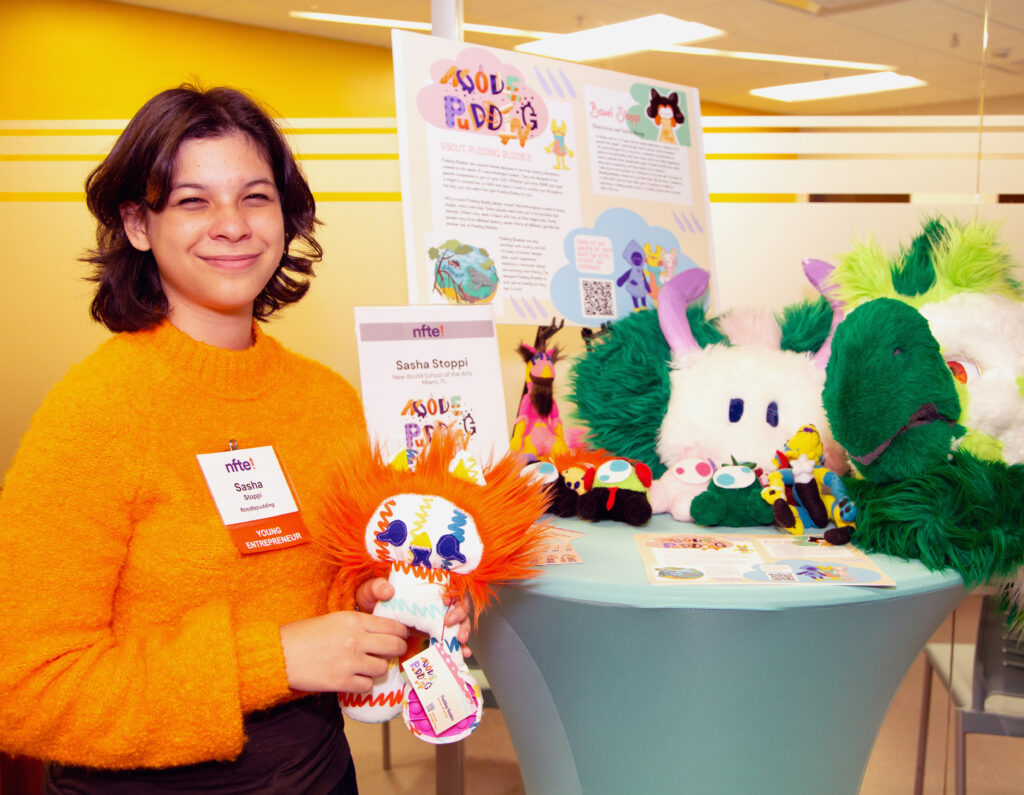
In the classroom, hands-on experiences are a part of Project-Based Learning, which engages students in activities that provide real-world understanding of a concept. At home, you and your children can engage in role-playing or board games like Monopoly/Game of Life to illustrate business concepts and strategy. Activities like crafting, cooking, and gardening are great opportunities to have your kids identify how their creations would fulfill a customer’s need or want. You can guide older children through creating a simple elevator pitch of their product or service for a “Shark Tank” style presentation to family members. Just remember to keep it age-appropriate and fun, so it doesn’t feel like schoolwork to your child!
2. Money Management
As an entrepreneurship teacher, I helped my students understand the cost of doing business (what expenses the business has) and whether they can truly afford to provide a product or service to customers. Most students recognize that balance between money the business has coming in versus what they have going out. At its core, this is money management. You can build such financial literacy skills in your children by being a role model and partnering with them. Share stories of your own money success or mistakes and lessons learned and give your kids opportunities for real-world application.
3. Build Tech Skills
Developing hands-on skills is essential but so is introducing children to age-appropriate apps to help build the digital skills needed to navigate a tech-driven world. The advancement of applications, design tools, and artificial intelligence (AI) gives kids new tools to research, simulate, or even create their own business concepts.
My classroom students used our computer lab for everything from designing creative business logos to visualizing or creating prototypes. They created collaborative virtual groups that were able to problem-solve together by participating in an online business plan competition. That competition, the World Series of Innovation (WSI), is run by my current employer, the Network for Teaching Entrepreneurship (NFTE). (Yes, that’s right. I enjoyed using their curriculum in the classroom so much that I went to work for them!)
WSI gives kids in the Imagination League category—as young as 5 and up to age 12— the exciting opportunity to use their imagination and problem-solve for real-world challenges related to the United Nations Sustainable Development Goals. And, if your child is a tween or older, they can participate in the Impact League to solve additional challenges and gain skills toward becoming the next leader in innovation. You do not need to be a tech expert to use tech tools with your child — you only need curiosity. Participate in co-learning alongside your children—researching together, testing ideas, even making a simple website or real online business. Many platforms, like WSI, provide toolkits for parents or facilitators to get started. You can start by asking your child idea-generating questions: “If you could make an app or game that solves a problem, what would it be or what would it look like?”
“If you could make an app or game that solves a problem, what would it be or what would it look like?”
Any tech tools your child uses should be supervised. Establish age-appropriate boundaries and use control settings to manage content access. When exploring with your child, model responsible behavior and discuss online safety. In addition, regularly check devices/tool upgrades and foster open communication to create an environment for healthy tech habits.
4. Take a Field Trip
As an educator, I consider a field trip a chance for my students to get out of the classroom and experience firsthand what they’ve been learning about. As a homeschooler, you have many public and private low-cost, local options that offer opportunities for children to learn. Have your kids explore the communities around you! Visit a family member’s workplace, a food kitchen, a bank, or even a co-working space. Encourage ways to participate (if possible) and observe the ways different customer needs are being met (or not met). Frame your visit with observational questions.
Observational questions
“How do they attract and keep customers?”
“What customer problem are they solving?”
“What are key takeaways from the visit?”
Firsthand experiences not only build customer empathy but also spark thinking about social entrepreneurship.
- Low-Cost Field Trip Options: Libraries, farmers’ markets, small local shops, business pitch competitions, etc.
- Virtual Field Trip Options: YouTube tours of businesses, kid-friendly TED Talks, museum exhibits, etc.
5. Think/Act Like a CEO
Encourage the characteristics you see in CEOs whom you respect in your children. Invite them to create biographies of an entrepreneur or innovator who interests them to find out what it takes to get to that level of accomplishment. This can help inspire your children to practice daily habits to help them mature.
Motivate your kids to communicate their thoughts and opinions. Ask them, “What’s your idea?” or “How could you solve that?” Boost creativity with a “CEO journal” that kids can use to write down challenges and solutions. Since entrepreneurs learn from failure, share stories of struggle, failure, and perseverance—from famous entrepreneurs and your life. This will support children in decision-making, risk-taking, and grit.
Kid-Friendly CEO Checklist:
- Curiosity – the strong desire to know or learn something
- Risk-taking – carefully assessing potential rewards against potential losses
- Grit – courage and resolve; strength of character
- Decision-making – the cognitive act or process of deciding something from multiple options
- Communication – the ability to exchange information, ideas, thoughts, or feelings through various means to create shared understanding
- Creativity – having or showing an ability to make new things or think of new ideas
- Flexibility – the ability to change direction or priorities based on the situation
- Resourcefulness – the ability to find quick and clever ways to overcome difficulties
There is a special set of skills that successful CEOs develop as they learn from their challenges and life experiences. They navigate the world with a confidence in themselves that quietly states, “Even if I don’t know right now, I know I can figure it out!” Imagine that for your children. Imagine little CEOs everywhere, ready to figure it out. And remember, you don’t need a business degree to raise a little CEO – just everyday opportunities, encouragement, and the willingness to let your kids experiment!
The educator in me will end this with some homework for you – pick one of these strategies this week, try it with your child, and see what sparks. You might be surprised by the CEO in your living room.
Free Webinar!
Want Help Teaching Your Children about Entrepreneurship?
Join NFTE CEO Dr. J.D. LaRock and Lead Instructor Ryan Kinser for a free webinar introducing NFTE’s groundbreaking course, Next-Level Startup: Make AI Your Cofounder.
Designed for teens ages 13-17, this course guides students as they launch real businesses while mastering key entrepreneurial skills such as confidence, adaptability, and communication. Participants will also gain the foundational tools needed to thrive in today’s tech-driven world. The webinar, offered at 2 p.m. and again at 7 p.m. EDT on Wednesday, Sept. 3, will inform parents about how the course works, what their teens will learn, and provide basic details such as pricing, course content, and how to apply ESA funds if needed.
Parents who learn about us through Hip Homeschool Moms get 50% off with payment code HIPSTARTUP. Use the code when registering for the course. It expires 7 days after the webinar. Space is limited, so express interest today! One lucky teen will receive free registration (a $1,200 value)!
Danice Ferguson, MBA, Sr. Manager, Training & Professional Development at the Network for Teaching Entrepreneurship (NFTE.com). For a look at NFTE’s Entrepreneurial Mindset Index (EMI), a more comprehensive list of characteristics that students are measured on, go to www.nfte.com/entrepreneurial-mindset.