
Nature, Wonder, and Worship: 5 Ways to Raise Creation-Loving Kids in Your Homeschool
“The world is charged with the grandeur of God.” – Gerard Manly Hopkins
I was blessed to grow up in the foothills of the Blue Ridge Mountains, in a little town by the lake. Most weekends in the fall and spring, my family and I would head up into the mountains to hike, camp, or find a quiet waterfall to hammock beside. As an adult, I now live far away from those mountains, but looking back, I can clearly see how the beauty and grandeur of nature shaped me. It stirred in me a sense of wonder and awe for the Creator that still stays with me today.
My husband, who spent his childhood near the coast, experienced that same sense of reverence during long days on the beach, observing plant and animal life, and exploring tide pools. (Honestly, he knows more about plants and animals than anyone else I know!)
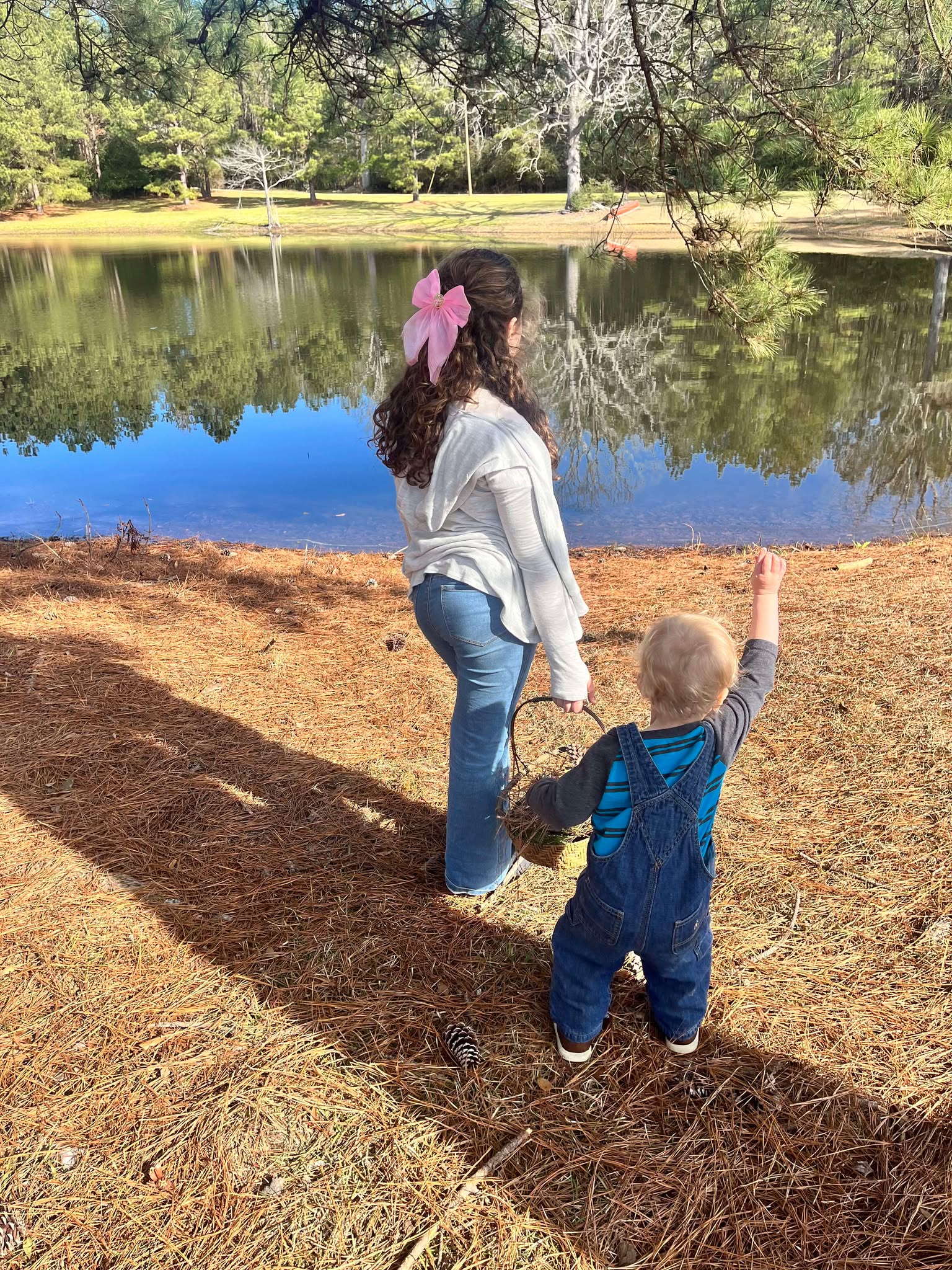
Now, as homeschooling parents, it’s important to both of us to nurture a love for nature in our children. We believe that cultivating wonder points children to the Creator and that caring for creation helps them to know God better and to think beyond themselves. As Christians, we also see creation care as part of our God-given task here on Earth.
I know many of us in the homeschooling community share an appreciation for nature alongside a desire to raise creation-loving kids. With that in mind, here are 5 ways I think we can help grow love and wonder for nature in our homeschools (and in our children’s hearts).
5 Ways to Grow a Love of Creation in Your Homeschool
1. Learn About, And Care for, Animals
God called Adam and Eve to have “dominion” over the animals of the garden. While this word may seem harsh to modern ears, it is actually a call to be a ruler. And using Scripture as a guide, we can safely assume that our rulership as humans ought to mimic that of our Creator: kindness, watchfulness, loving care.
Given this first mandate, is it any wonder that children seem born with a fascination for animals? Animals are like us, but with unique ways of feeling, living, and communicating. There is no end to their variety, or to their ability to teach us and surprise us. For my children (ages 2 and 10), animals have brought them joy and laughter since before they could even crawl. In addition to words like “Mama” and “Dada,” the names of our family pets have been among some of the first words that both my children have spoken. My toddler always wants to know what any unfamiliar animal is, and what sounds it makes.
In fostering a sense of wonder and fascination with nature, starting with animals is the most “natural” place to begin! Read books with your children about different species of animals, go outside and observe, try some animal unit studies, watch animal documentaries, or (if you can) adopt a family pet. These things will go a long way to fostering a sense of love and responsibility for God’s Animal Kingdom and the natural world.
2. Plant a Garden
I probably don’t have to tell homeschooling parents about the learning benefits of planting a garden. Still, this article would not be complete without noting that planting a garden is one of the best things you can do to instill a deep love for nature. It also awakens an important sense of responsibility in caring for it! In addition to the many educational and life lessons you can take away from planting a garden, working the soil and watching things grow can instill a sense of awe for our connectedness with the Earth.
Children love the reward of seeing something they’ve planted with their hands respond to their care. If you’re not a successful gardener (that’s me), try planting something small that sprouts quickly, like a lima bean or a sunflower seed. I’ve done this with my children, and they loved watching something they put into the Earth take root. Likewise, I loved watching them become observers and caregivers.
It is amazing to see how a connection to plant life can awaken these qualities in children. It also gives Christian families a good opportunity to talk about God’s care and watchfulness over our lives as a special part of His Creation.
3. Keep Nature Journals and Create Nature Trays
Nature journaling is a gentle yet powerful habit. It invites children to slow down and notice details in the world around them. I also love that it is something children can do at almost any age, as soon as they can draw. Even simple sketches or notes about the weather can help sharpen observation skills and cultivate gratitude. As children grow older, you can expand their nature journals to include thoughtful notes, writing, and even further research findings on something that caught their eye.
Exactly how you keep a nature journal looks different from homeschool to homeschool. Personally, I find that simple works best for us and keeps this as something that my older child can feel ownership over. I know other homeschooling families who have more detailed instructions and requirements for their nature journals to help build research skills, cursive-writing, etc (whatever it is!)
All you need to get started is a simple sketchpad or composition book. Encourage your child to draw and/or write about what they see, write questions about it, and include Scripture or poetry that reflects the beauty of what they’ve encountered.
Nature trays are another great way to engage curiosity. It’s not hard, and you don’t need anything special to get started. Just take your family outside to collect a few leaves, pinecones, shells, or flowers and display them in a shallow tray or basket. Rotate these seasonally or thematically to create interest. These small, simple displays help children begin to see the wonder in everyday things.
My toddler is too young to write, or even draw, but he loved being part of building a nature tray when we did this last winter. He caught on quickly that we were looking closely at nature and finding things that caught our attention.
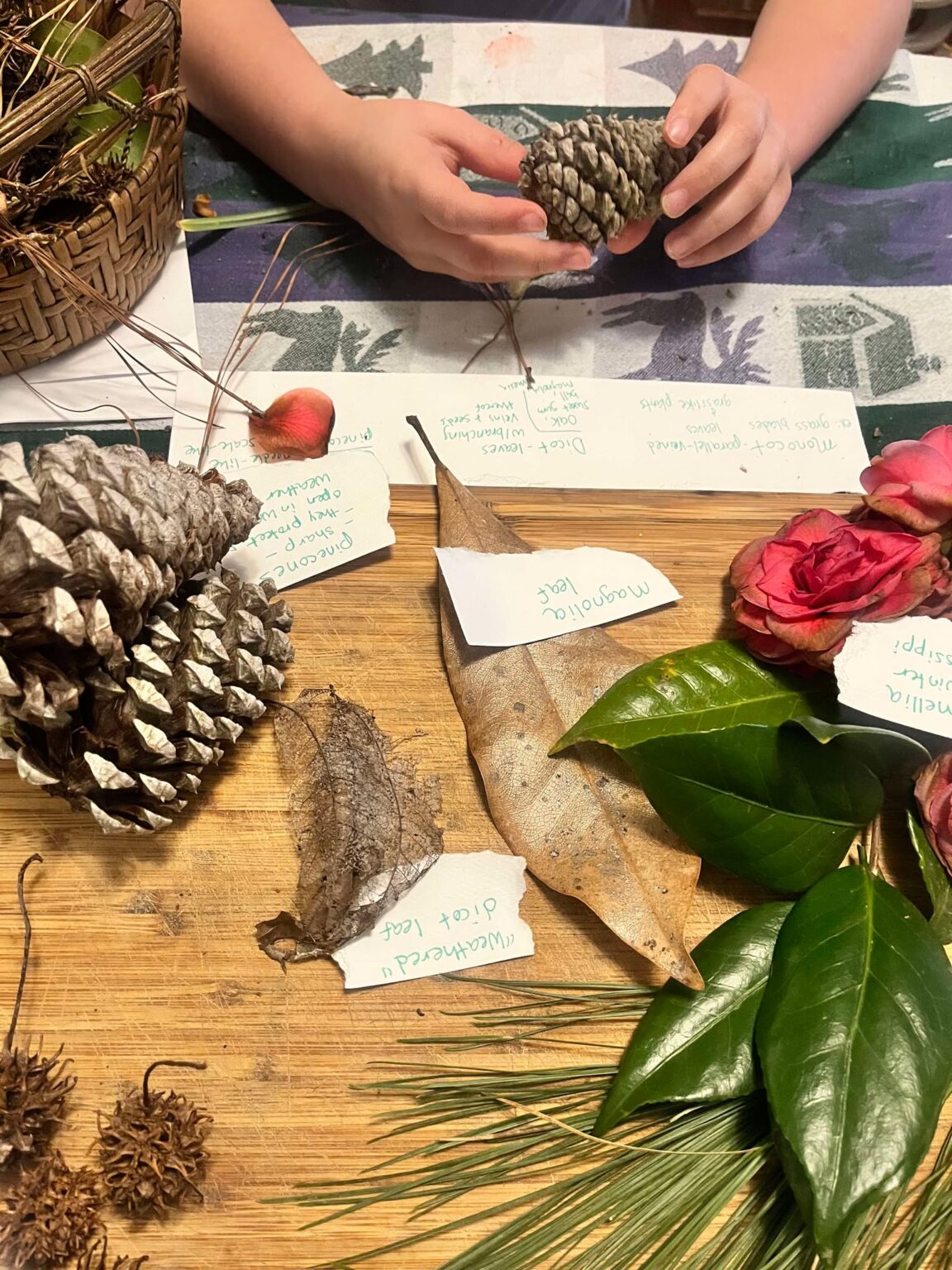
These two activities are simple, but very real, ways to cultivate an appreciation for nature in our children and draw their attention to God’s beautiful world.
4. Explore God’s World
Nature journaling and nature trays have a very important process in common when it comes to raising creation-loving kids: just making time to get outside and explore God’s world!
When things are busy, I am personally guilty of forgetting to make nature exploration a priority in our family. I know this is the case for a lot of homeschooling moms! That’s why I think it’s so important to make it a priority, or schedule an opportunity, to explore God’s world. There is so much we can learn from observing plants, animals, ecosystems, and more. Getting outside to explore also builds a strong foundation for curiosity and asking questions! This starts at the youngest ages. Even my toddler is in a constant stream of “What’s that?” every time we go outside.
Whether you decide to take a pre-dinner walk around the yard several times a week, make a weekly trip to a local park or nature trail, or prioritize monthly or quarterly field trips to places like the zoo or aquarium, all of these small steps can cultivate a greater awareness of, and appreciation for, the beauty of the creation and an appreciation of the Great Artist behind it all.
5. Choose Books That Celebrate Creation and Inspire Stewardship
In our homeschool, as in many others, good literature leads the way in almost anything I teach my children! Research supports the idea that good books are the foundation for imagination, empathy, and value-building. Children learn what kind of people they want to be when they read. (They also learn what kind of people they don’t want to be!) They begin to build an idea of the way the world is, and how they would like it to be, when they engage in a formative story.
So how does this apply to raising creation-loving kids? We can look for books that spark a wonder for the natural world, that frame God as the artist, and that inspire children to be good stewards. There are some wonderful children’s books out there that tick the first two boxes, like The Secret Garden and Maxine’s Tree.
However, many of the books out there on this topic don’t necessarily point to God as creator, or talk about our mandate to care for the Earth and its creatures. As a Christian parent, this is something I think it’s important to talk about. We don’t just take care of the Earth because we want to; we also do it because God wants us to! We care for nature out of respect for the creatures who live there, but also out of respect for God’s creation and the special task he gave us.
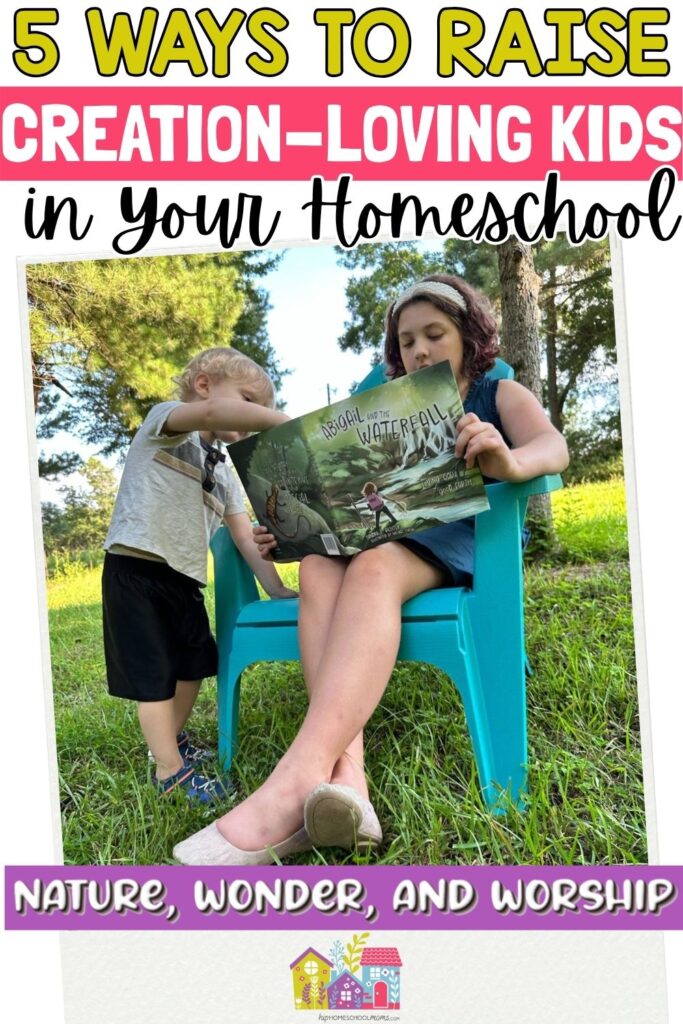
Recently, I was excited to find all of these messages, wonderfully conveyed, in a beautiful children’s book, Abigail and the Waterfall.
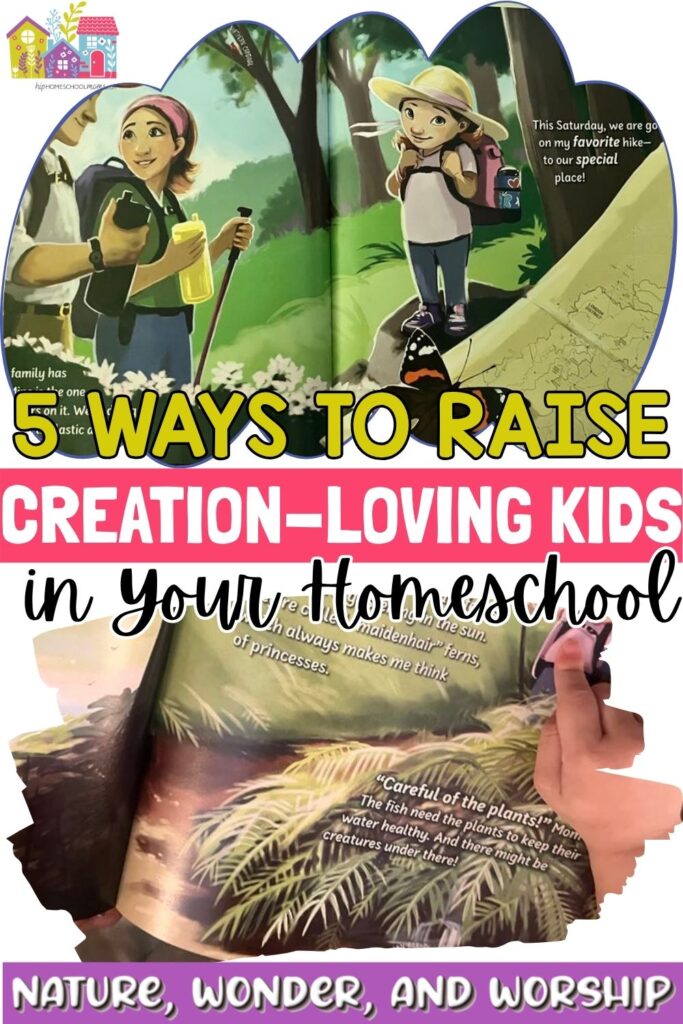
This book, written by Sandra L. Richter and gorgeously illustrated by Michael Corsini, invites children to join young Abigail, her toddler-aged brother, and her mom and dad on a monthly family adventure as they hike through the woods to find their beloved picnic spot: a special waterfall! Along the way, there are animals and plants to spot on each page, labeled with their full common names. Sometimes these are hidden in the background, and sometimes they almost appear to be popping off the page in 3D-style illustration.
I loved the way the writing and images capture a child’s joy and wonder at being outside and exploring. The book never says how old Abigail is exactly, but we can imagine her being between about 4 and 8, old enough to be a “big sister” to her toddler brother, but young enough to be carried by her father and to express her joy over simple things in a believably childlike way.
Through this simple and sweet story, Abigail conveys much about her loving family and the example they set for her when it comes to nature. They try to reduce plastic waste by using refillable water bottles, and they do not disturb the animals while also observing and appreciating them. They are also careful to clean up after themselves, and make a priority of regularly (once a month) going on a big day hike to explore nature, observe the animals, and thank God for His beautiful work.
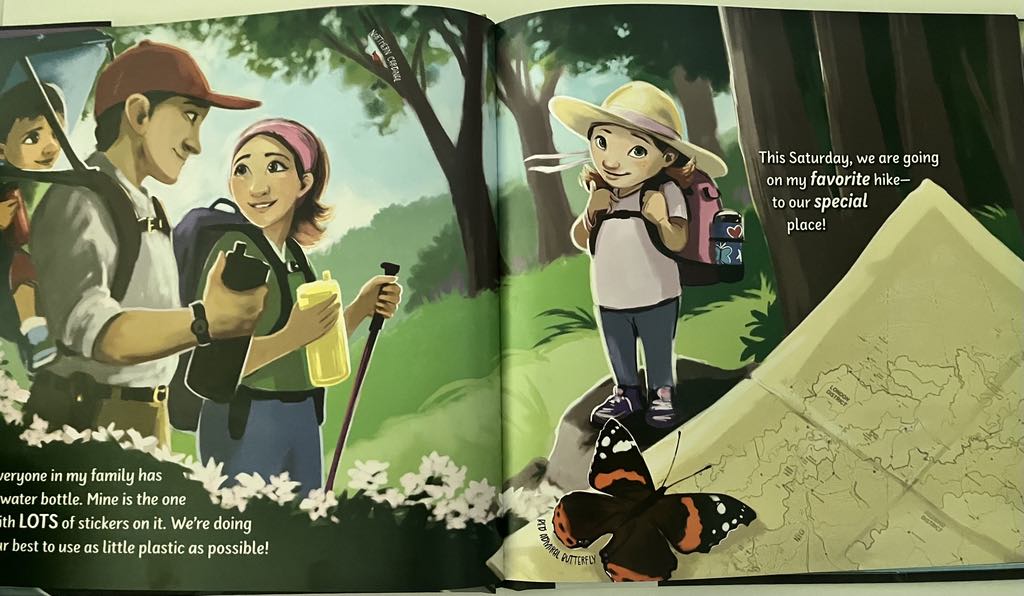
Michael Corsini’s artwork elevates this story even more. His illustrations are rich with color, movement, texture, and expression. Each page invites the reader to linger and look closer at the special details. I love how this mirrors the heart of the message: “let’s slow down and really see what God has made.” The back of the book even includes extra ideas for how to take care of nature and things to discuss with your children.
This story is a wonderful addition to any home library where fostering a love of Creation and Creator is a priority. With the main character’s estimated age and the simple, relatable language of the text, I’d place top enjoyment and accessibility for this book in the range of 2-10. My children are at either end of this age range, and they both enjoyed it!
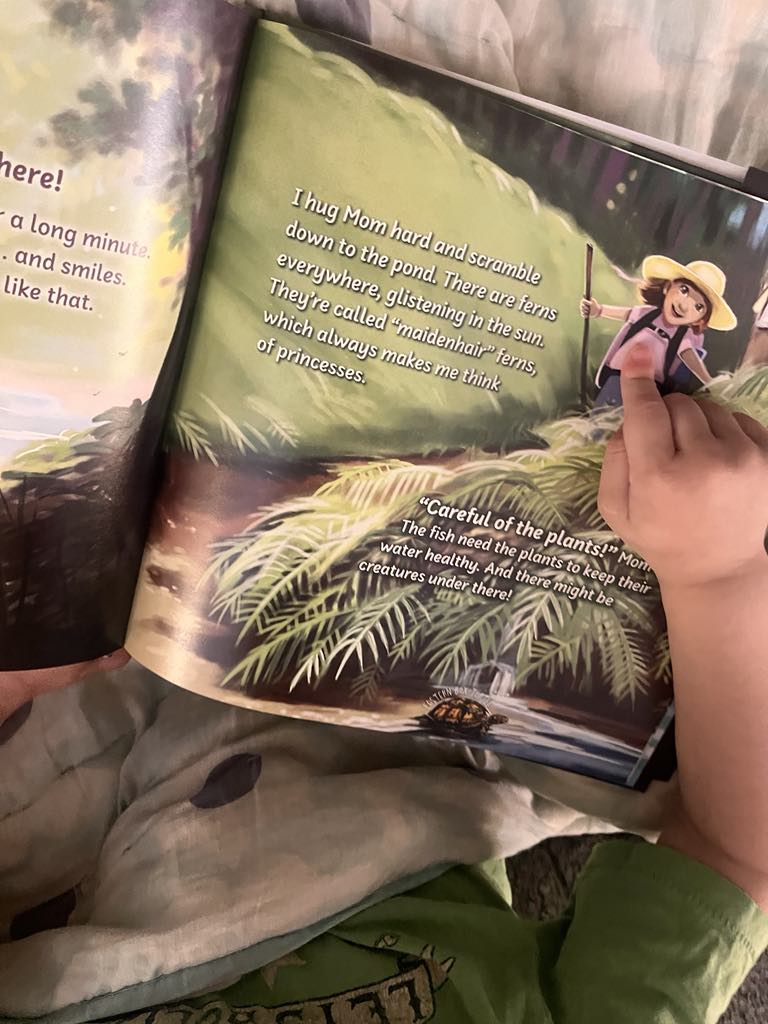
My 2-year-old son loved the illustrations and finding the animals hidden on each page. My daughter, a nature lover, enjoyed the overall message.
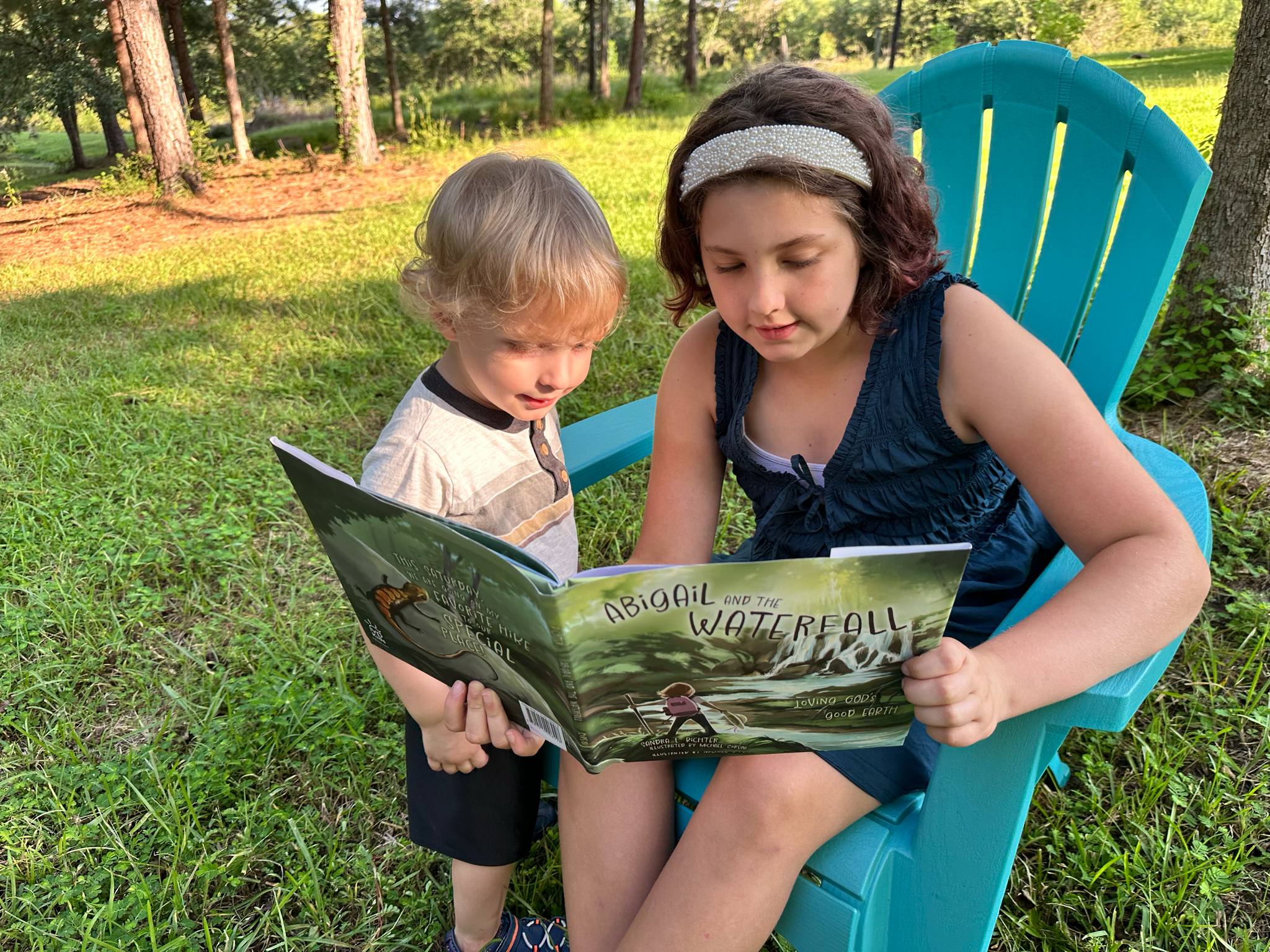
Abigail and the Waterfall is more than a story; it’s an invitation to live differently. I loved how this simple, beautiful book models a family rhythm that prioritizes time in creation and teaches environmental responsibility through small, consistent actions. More uniquely, I love how it keeps God at the center of it all.
As a Christian homeschool mom, I found this book incredibly refreshing because it doesn’t separate environmental care from biblical faith. Instead, it shows them working hand-in-hand, as they were always meant to. If you’re looking for a gentle, theologically grounded, beautifully illustrated book to add to your homeschool library, I highly recommend Abigail and the Waterfall.
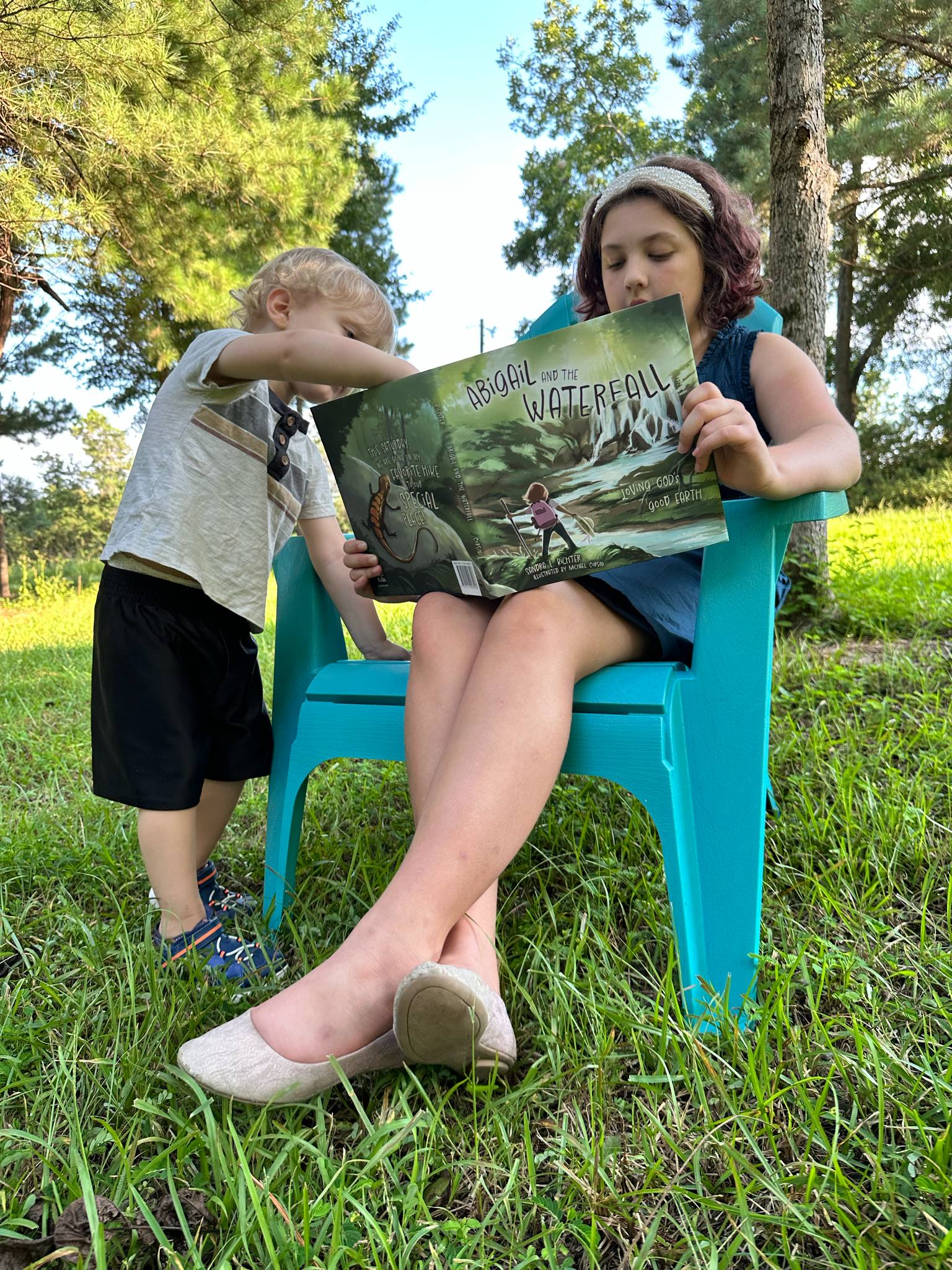
In conclusion, and keeping all of these points in mind, perhaps the best thing we can do to model wonder, gratitude, and stewardship of nature is simply this: be the example in all of the above. When we show fascination for plants and animals, continue learning about the world around us, try our hand at gardening (or do the best our skillset allows), keep nature journals, and express interest in the little things we discover in our own backyard, we’re communicating something powerful through the example we set. When we read and discuss books that reflect a sense of wonder and care for creation, like Abigail and the Waterfall, we’re shaping hearts and making an impact that will last a lifetime.
Perhaps not all Christian circles prioritize talking about nature this way, but perhaps they should. Conversations on this topic matter, not only because we share this one beautiful world, but because God entrusted us with its care. Knowing and appreciating nature is part of God’s general revelation, His way of speaking to us through what we can immediately experience. As we observe the things He has made, we come to know Him more fully.
If you’re looking for a story that brings all of this to life, Abigail and the Waterfall is a wonderful place to start, alongside some of the practical, hands-on ideas in this article.
I hope these five suggestions encourage you on your journey toward raising creation-loving kids and fostering wonder and stewardship for God’s creation, one small nature walk or conversation at a time.