
Cultivating Rest Through Story: A Review of The Unwinding Path
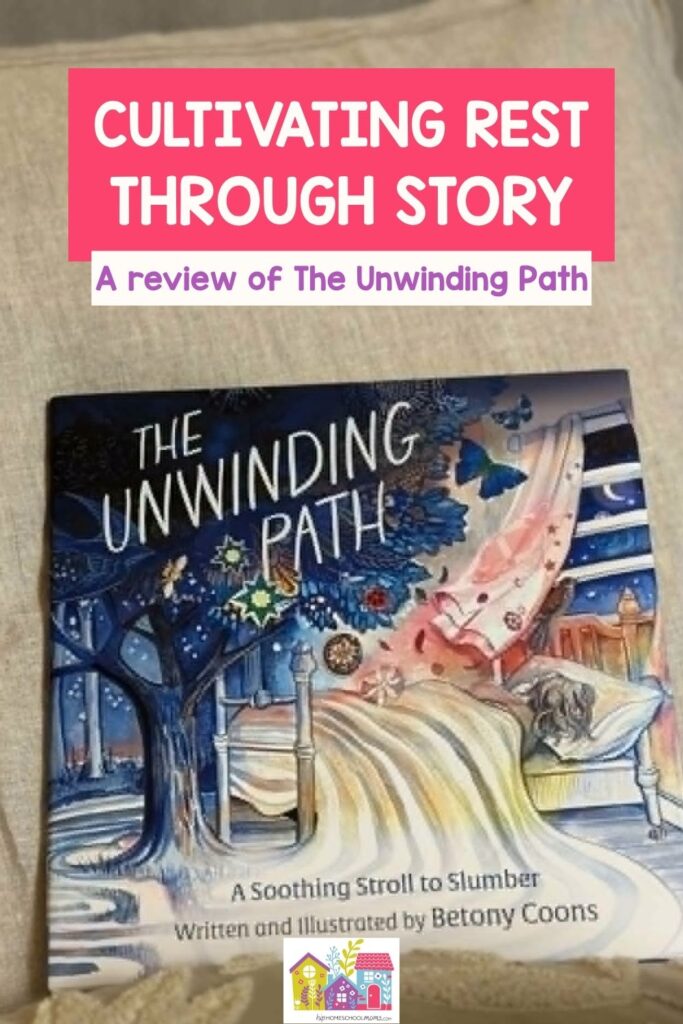
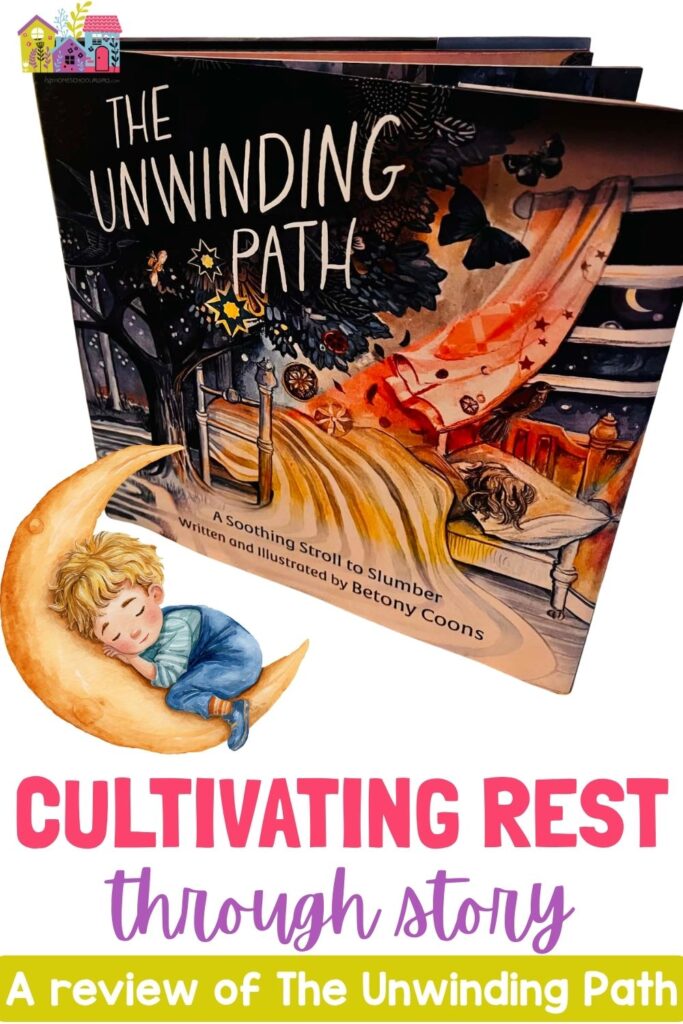
As a homeschooling mother of two (ages 3 and 10) and lifelong literature lover, I was thrilled to get the chance to review The Unwinding Path: A Soothing Stroll to Slumber by Betony Coons. This is a new release by IVPKids, the children’s book imprint of InterVarsity Press. While I didn’t know much about the book initially, our family owns other books published by IVPKids. I have always been impressed by the quality, creative vision, and careful curation of texts with a strong biblical worldview.
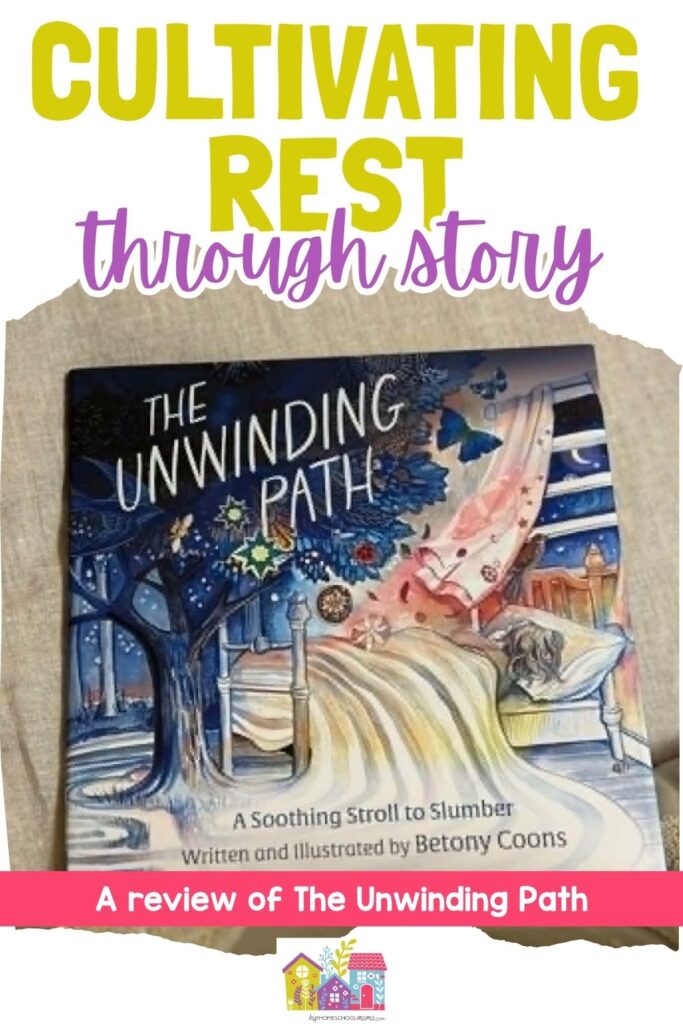
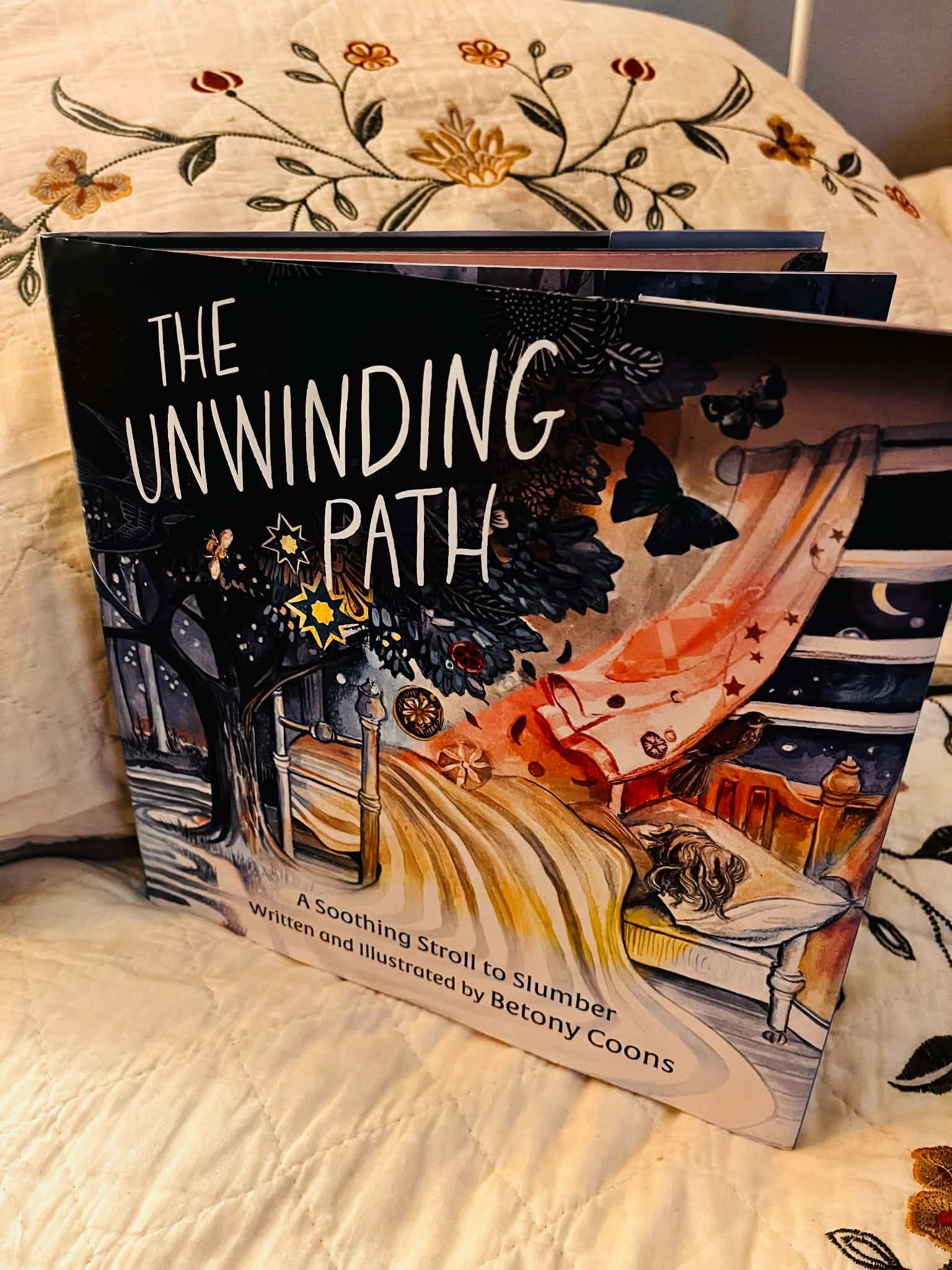
At first glance, The Unwinding Path: A Soothing Stroll to Slumber by Betony Coons presents itself as a beautifully illustrated bedtime story designed to help children settle down at the end of a busy day. Its compact size suggests a short picture book for younger children. Initially, that was all I expected it to be. More than anything, the whimsical watercolor illustrations immediately caught my attention and made a strong first impression. While I assumed the content would be a better fit for my three-year-old son, I knew my ten-year-old daughter and I would enjoy it for its visual beauty alone.
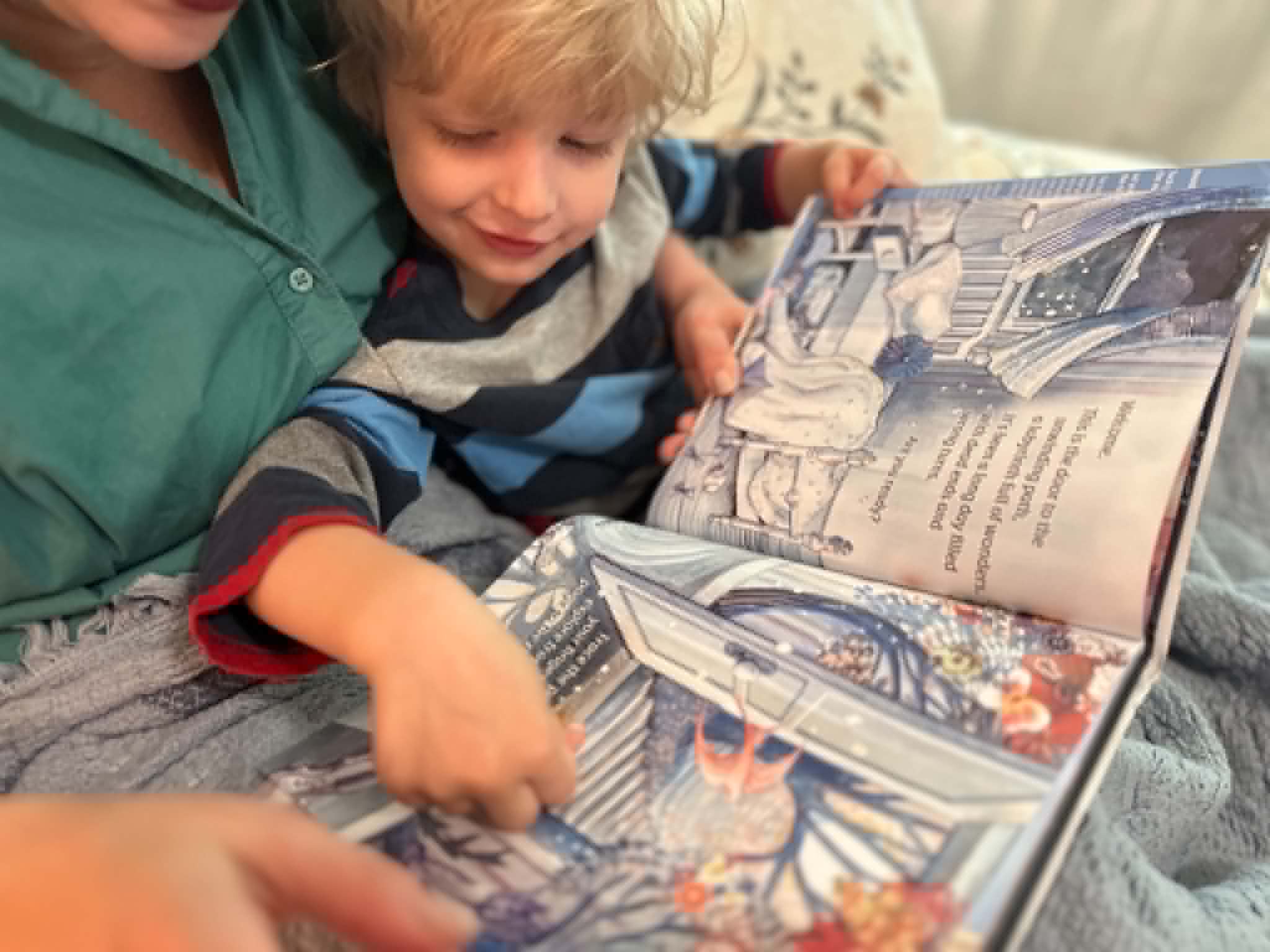
However, after reading it once, and then again, and then again, this little book surprised me. So much more than a story to read, The Unwinding Path is an experience to share. Through finger-tracing exercises, gorgeous artwork, gentle reminders of God’s presence, and rich symbolism, the book invites readers of all ages on a winding journey toward rest.
About the Publisher: IVP Kids
Before I get into the book itself, I want to take a moment to mention the publisher, InterVarsity Press, and specifically its children’s imprint, IVP Kids. As a homeschool mom, Christian parent, writer, and literature teacher, I’ve been consistently impressed by IVP Kids’ ability to produce beautifully written and illustrated books that explore meaningful themes through a biblical worldview.
Our family owns two other IVP Kids titles, Abigail and the Waterfall and Kailee Prays for the World, both of which left a strong impression on me. One thing I particularly appreciate about this publisher is that its books encourage children to engage thoughtfully with the world around them. Rather than simply telling children what to think, these stories invite them to observe, wonder, ask questions, and engage their minds, hearts, and imaginations.
In Abigail and the Waterfall, for example, children are encouraged to delight in God’s creation through exploration and observation. In Kailee Prays for the World, they are introduced to people and cultures around the globe while learning to respond with compassion and prayer. Though the subjects are different, both books share a commitment to cultivating curiosity, empathy, and faith.
The Unwinding Path continues that tradition. It is a God-centered story that gently brings children (and honestly, parents as well) along on a journey toward an activity that doesn’t always come easily: rest. Rather than simply instructing children to settle down and go to sleep, the story invites them to slow their thoughts, notice the world around them, and gradually prepare their hearts and minds for slumber.
About the Author
Betony Coons is both the author and illustrator of The Unwinding Path. An artist, storyteller, and mother, she brings together beautiful artwork, thoughtful storytelling, and meaningful symbolism in a way that strikes me as both imaginative and deeply intentional.
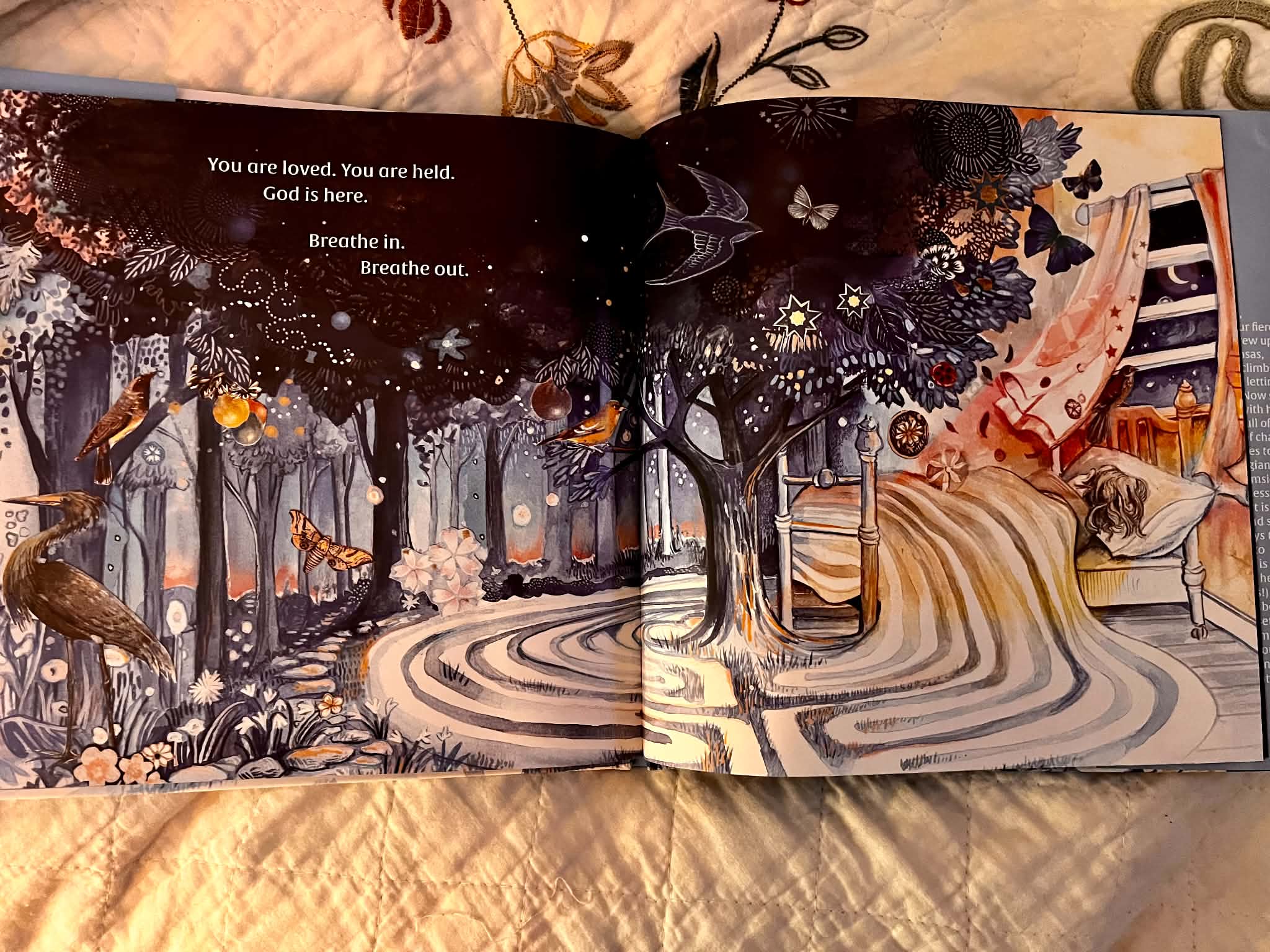
Her art is colorful, whimsical, and engaging. In many ways, it is just as important to the story as the words themselves. Every illustration invites children to slow down and notice both the small details and the larger theme of a winding journey toward rest.
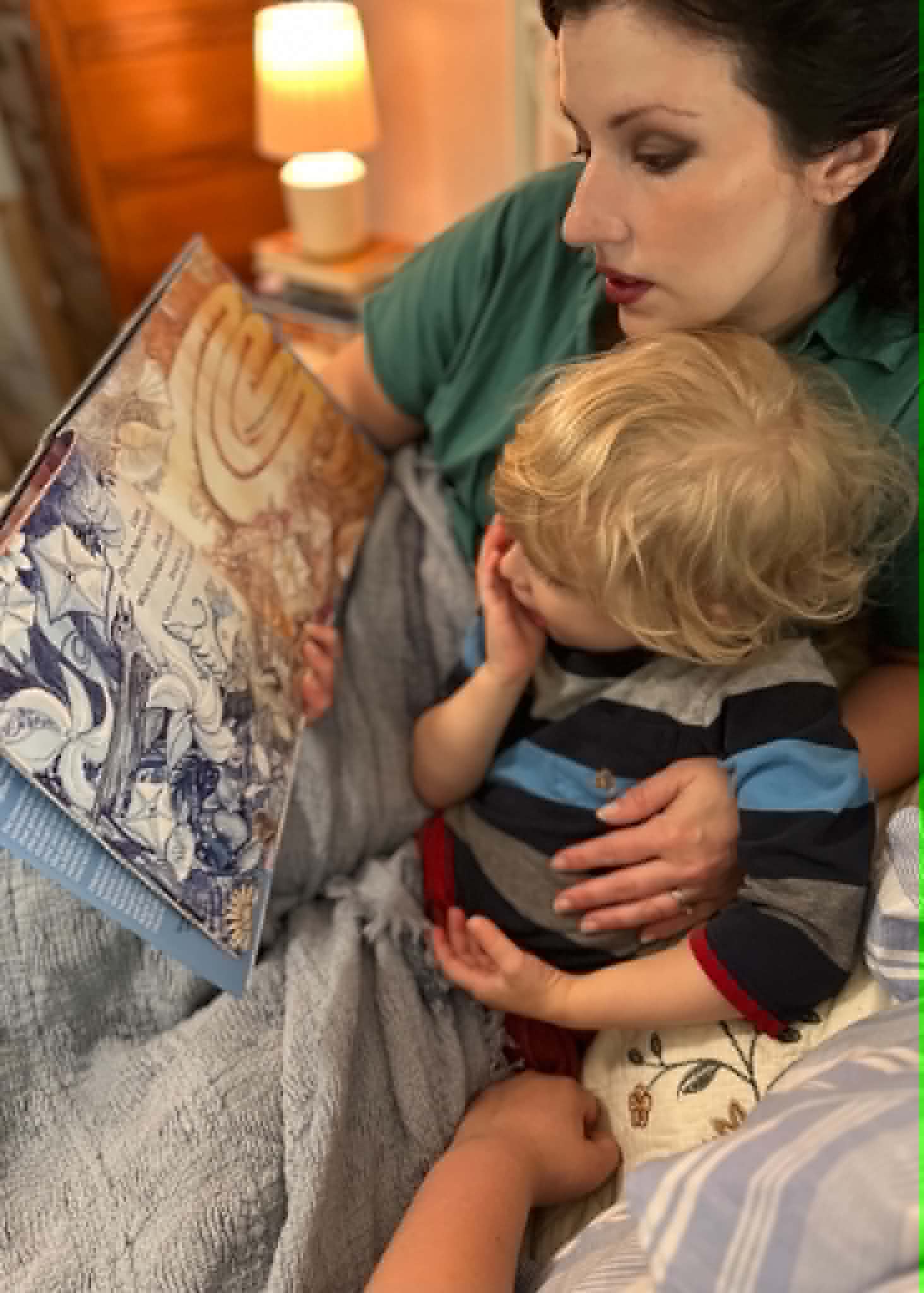
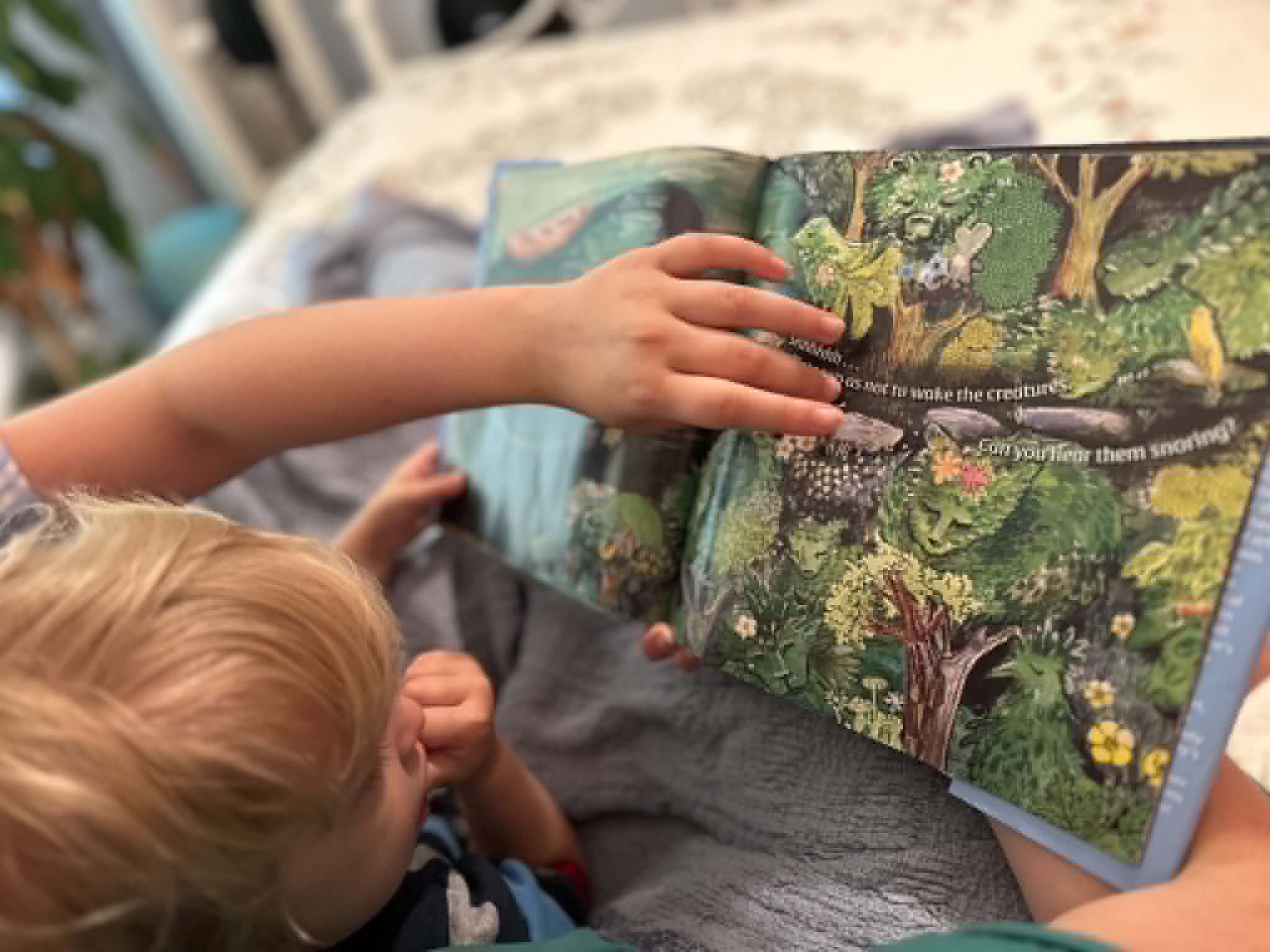
As someone who comes from a family of artists and enjoys painting with my own children, this was one of the first things that really drew me into the book. The illustrations immediately captured my children’s attention and sparked conversation as we explored each page together. Rather than simply serving as a backdrop to the story, the artwork feels like an essential part of the reading experience. We’ve read the book multiple times now, and each reading seems to reveal new details we hadn’t noticed before.
One of the things I appreciate most about Coons’ approach is her obvious understanding of the role wonder and curiosity play in engaging children. Through both the story and the illustrations, she creates an experience that encourages young readers to slow down, pay attention, and fully enter into the journey she has created.
Her paintings invite readers to linger, which echoes the book’s larger message about rest, reflection, and learning to be present. As a lover of art and poetry, I genuinely appreciate it when form and function mirror one another, and that’s exactly what I see happening with the words, artwork, and activities in this book. Together, they create an experience that invites readers to slow down and practice the very restfulness the story celebrates.
Interactive Elements and Initial Hesitations
In the interest of complete honesty, I wasn’t entirely sure what to make of some of the follow-along instructions when I just did an initial skim through the book. Lines such as, “Press hard as you climb, lifting slowly, feel the weight fall away,” accompany the winding path that children trace with their fingers throughout the story. At first glance, it reminded me a little of the relaxation tapes my psychotherapist parents used to play for me in the 1990s to help me fall asleep. We joke about those tapes to this day, so I was a bit skeptical.
But then I remembered something important: those techniques (even though the 90s cassette format was a little silly) actually worked.
And I discovered that the techniques in this book work, too. Some elements just may not fully resonate when you’re simply flipping through the pages. However, they land differently when you actually slow down and experience the book as it was intended to be read.
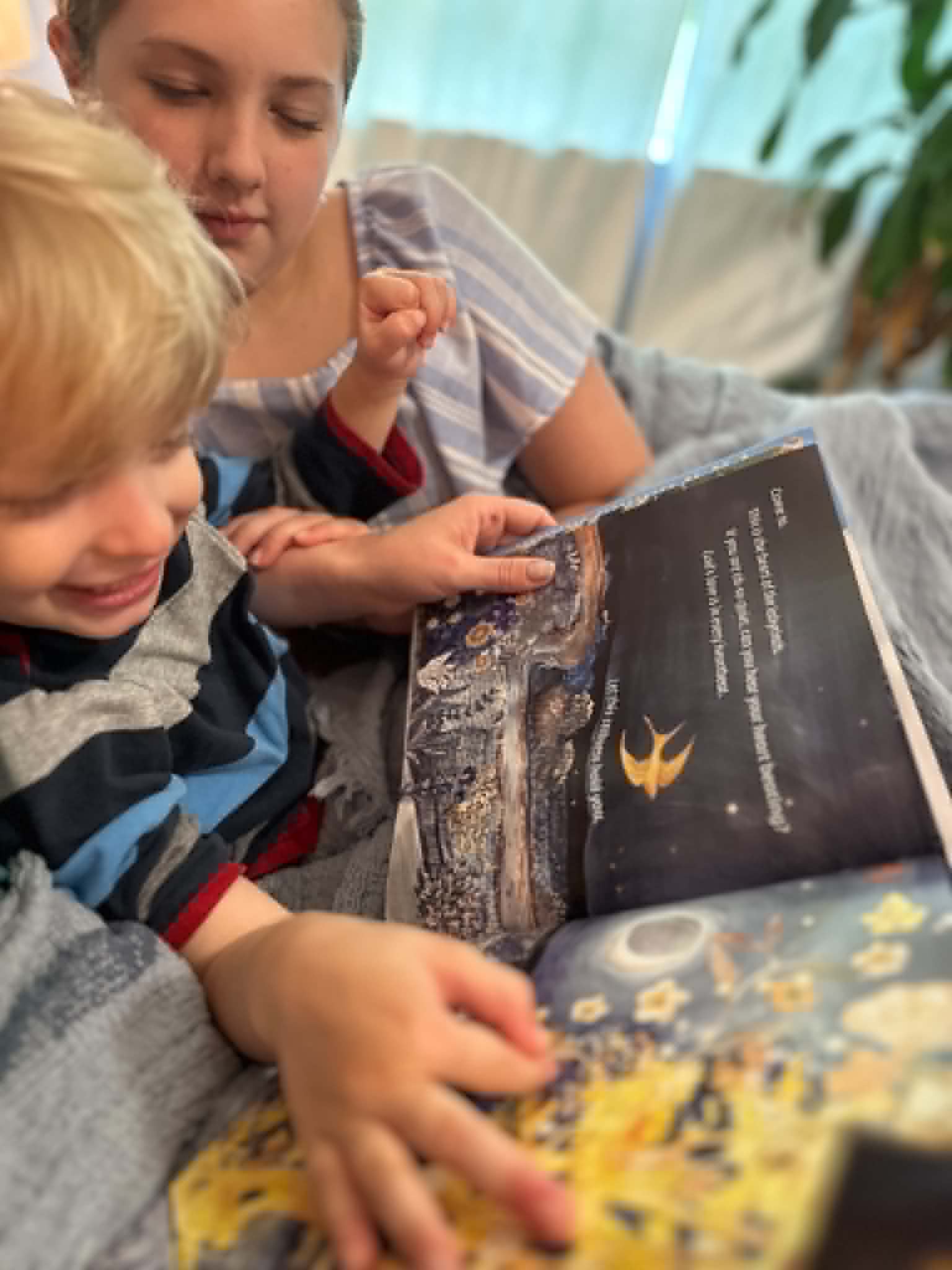
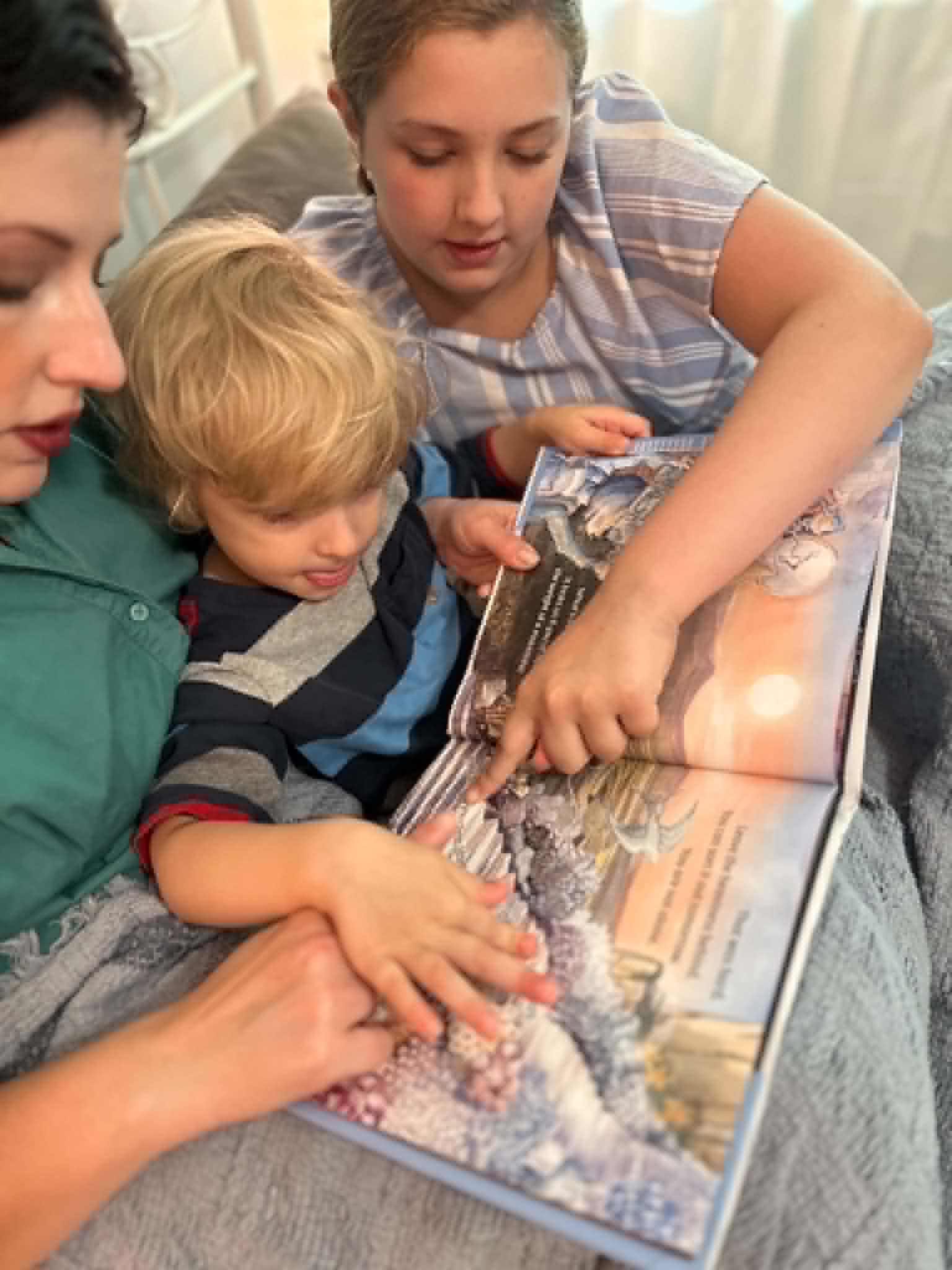
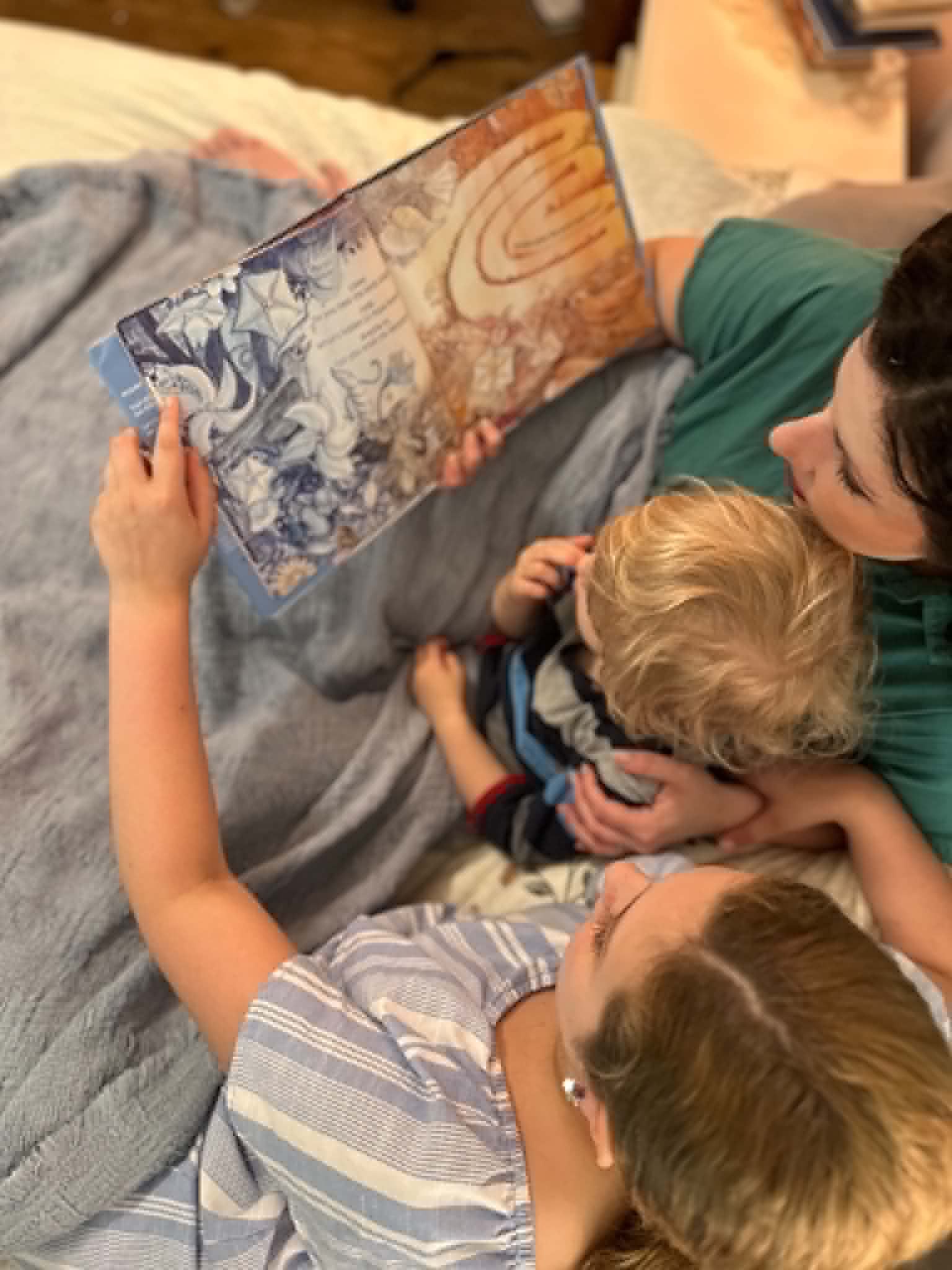
I realized this as soon as I sat down with my children and experienced the book the way it was intended to be experienced. We followed the winding paths with our fingers. We paused for the prompts. We paid attention to the illustrations. We obeyed the challenge to, “breathe in, breathe out.” We “scooped up” the water from the page and imagined it dripping back into the pool.
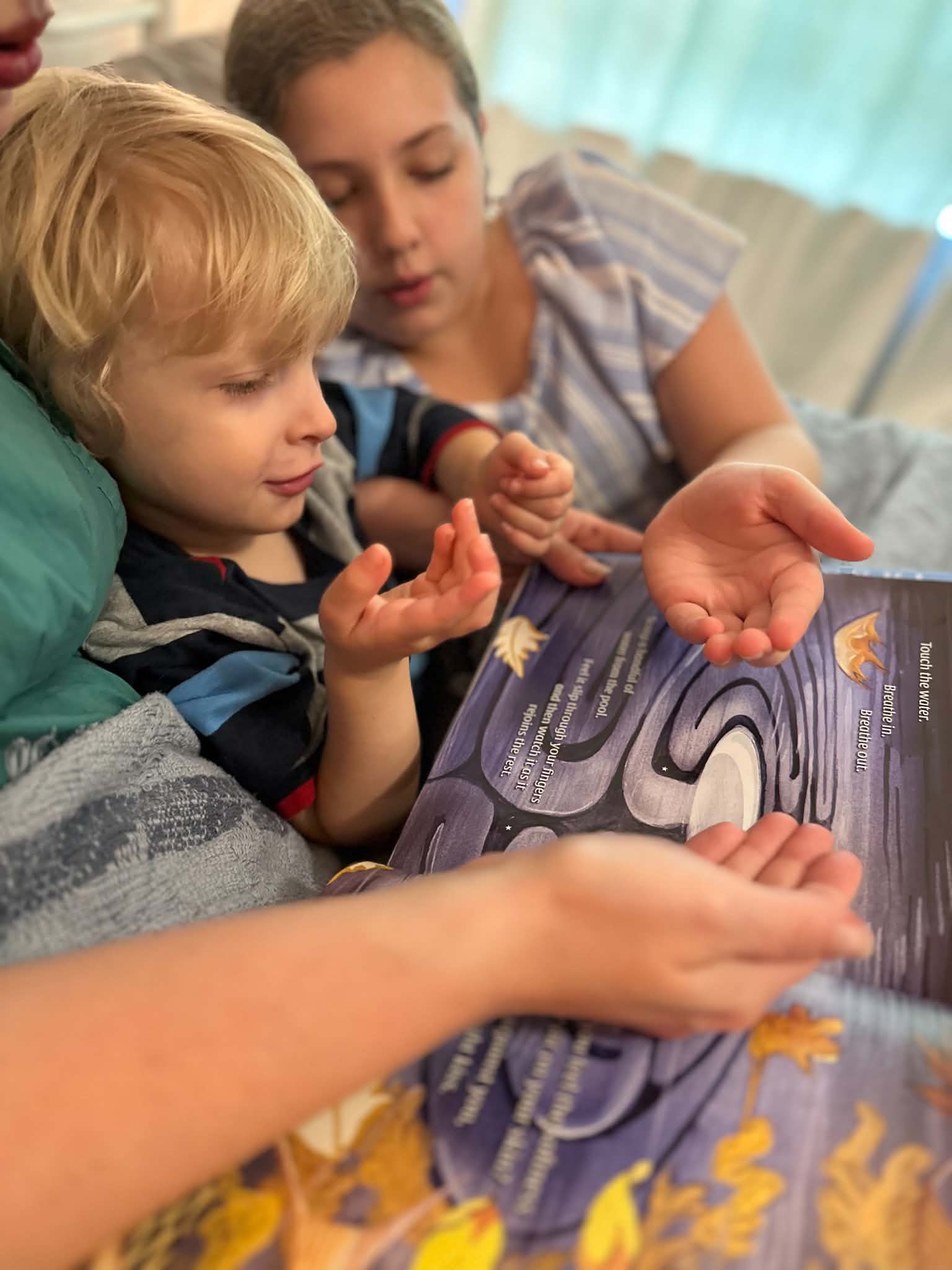
We took our time exploring each page rather than rushing through the story. The experience, when approached the way it was meant to be, was incredibly calming. My 10-year-old struggles with some anxiety from time to time. She enjoyed the exercises in this book so much that now, whenever I read it to my son, she comes and joins in.
What We Found: Rest, Faith, and Symbolism
As we worked our way through The Unwinding Path, what we found was a soothing journey with a dual purpose. On one level, the book helps children wind down and prepare for sleep. On another, it gently explores the idea that rest is not merely a necessity, but a gift.
In a culture that often treats rest as something we squeeze into the margins after everything else is finished, The Unwinding Path offers a different perspective. Throughout the story, winding down is presented as a journey worth taking. Rest is not portrayed as wasted time or merely a necessary interruption between productive moments. Instead, the book suggests that laying down our burdens, slowing our thoughts, and preparing for rest have value in themselves.
One illustration captures this beautifully when the reader is asked, “Wait. What’s that you’re carrying?” It is a simple question, but one that invites both children and adults to consider what they may be holding onto as the day comes to a close.
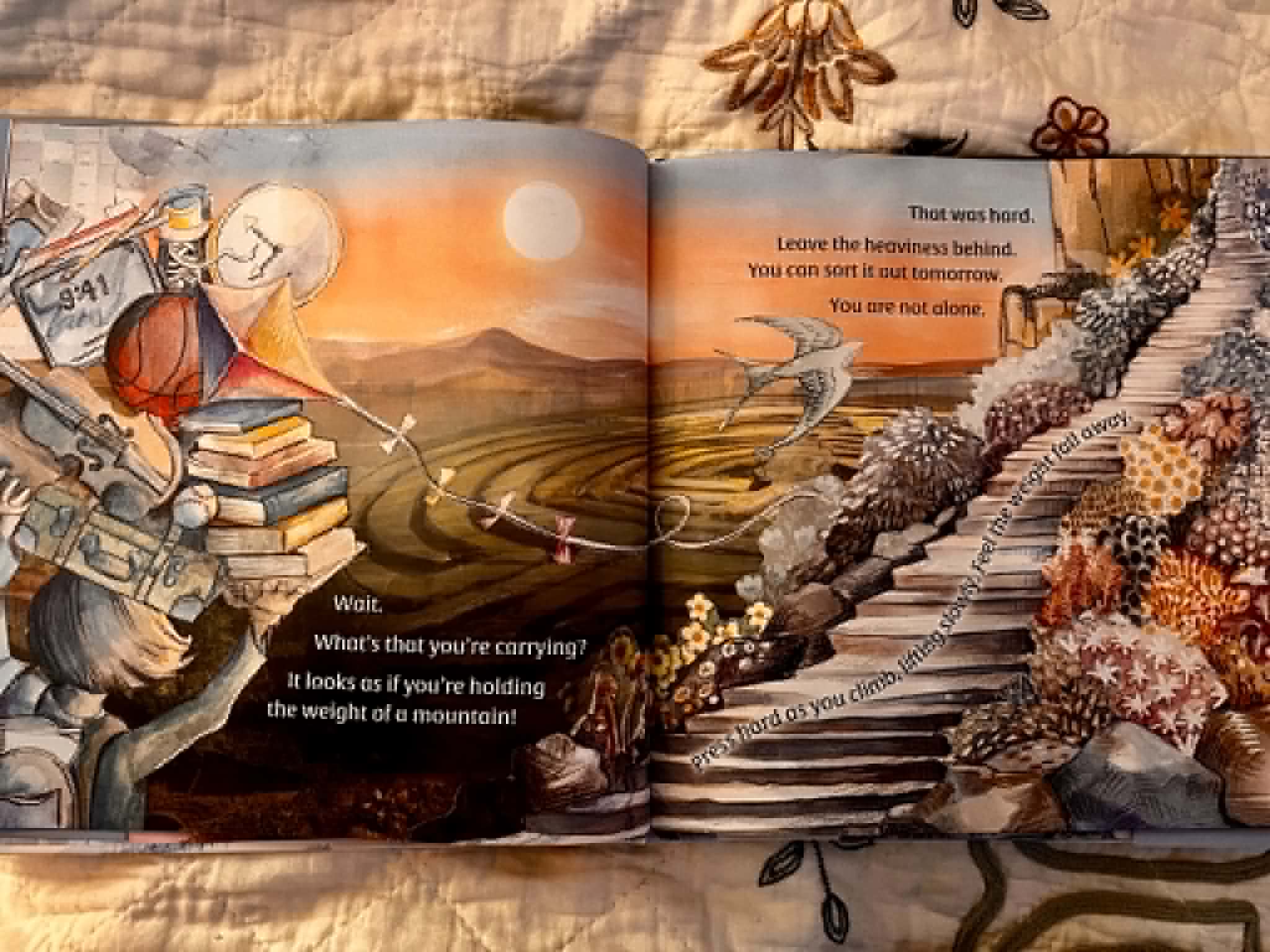
What makes the book especially meaningful is the way these themes of rest and reflection are woven together with reminders of God’s love, presence, and care for His children. And this is deeply biblical. Scripture does not present rest as a nuisance or an obstacle to productivity. God Himself rested after Creation, and Jesus offers this invitation in Matthew 11:28: “Come to me, all you who are weary and burdened, and I will give you rest.”
Every time I read The Unwinding Path with my children, I was struck by how naturally faith, peace, and rest are intertwined throughout the story. These themes come to life through the guided exercises, the gentle reminders of God’s presence, and the gorgeous illustrations, which are rich with meaning and symbolism.
Symbolism
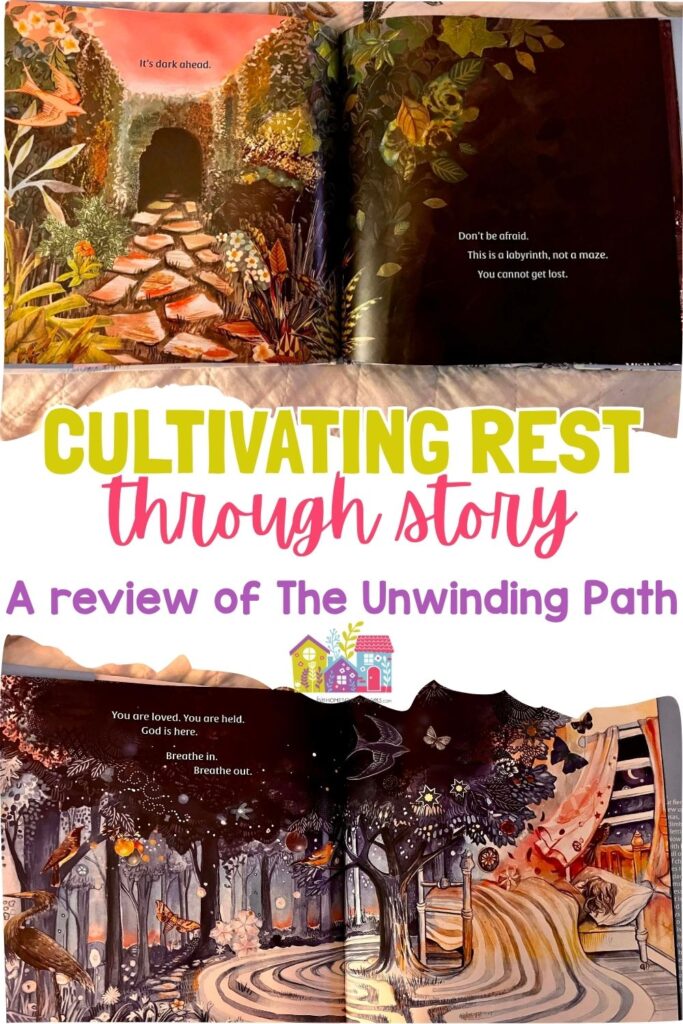
The entire story is built around the image of a labyrinth, which serves as the book’s central symbol. Before leading readers into a dark and unfamiliar tunnel, the author offers a reassuring reminder:
“Don’t be afraid. This is a labyrinth, not a maze. You cannot get lost.”
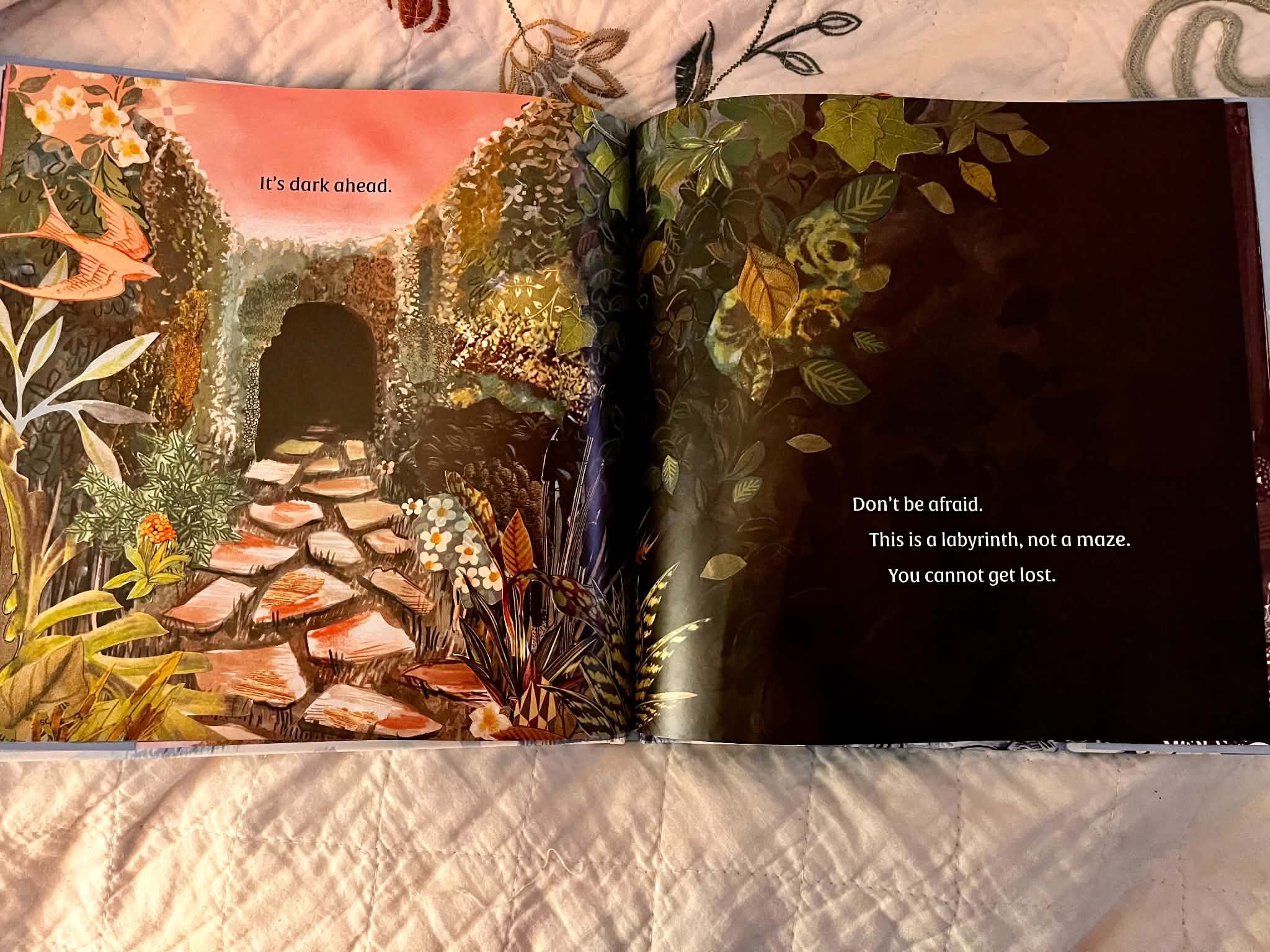
I found this distinction both beautiful and important.
Many people assume that a labyrinth and a maze are the same thing, but there is an important difference. Whereas a maze is designed to confuse with dead ends and wrong turns, a labyrinth follows a single path. In preparing this review, I learned that labyrinths have historically been used in Christian tradition as symbols of pilgrimage, prayer, and the spiritual journey toward God. The path may twist and turn, but it ultimately leads to the center and then back out again.
To me, this makes the labyrinth a powerful symbol of the Christian life. Christ is at the center of all our journeys. This includes, as The Unwinding Path beautifully reminds us, our journey toward rest.
My favorite page in the book comes when the reader reaches the heart of the labyrinth, where a golden tree stands as a symbol of peace, presence, and divine love. There, readers are invited to listen to the rhythm of their own hearts as the text gently reminds them:
“If you are oh so quiet can you hear your heart beating? God’s love is in every heartbeat. Let this stillness hold you. Peace be with you. Peace be within you.”
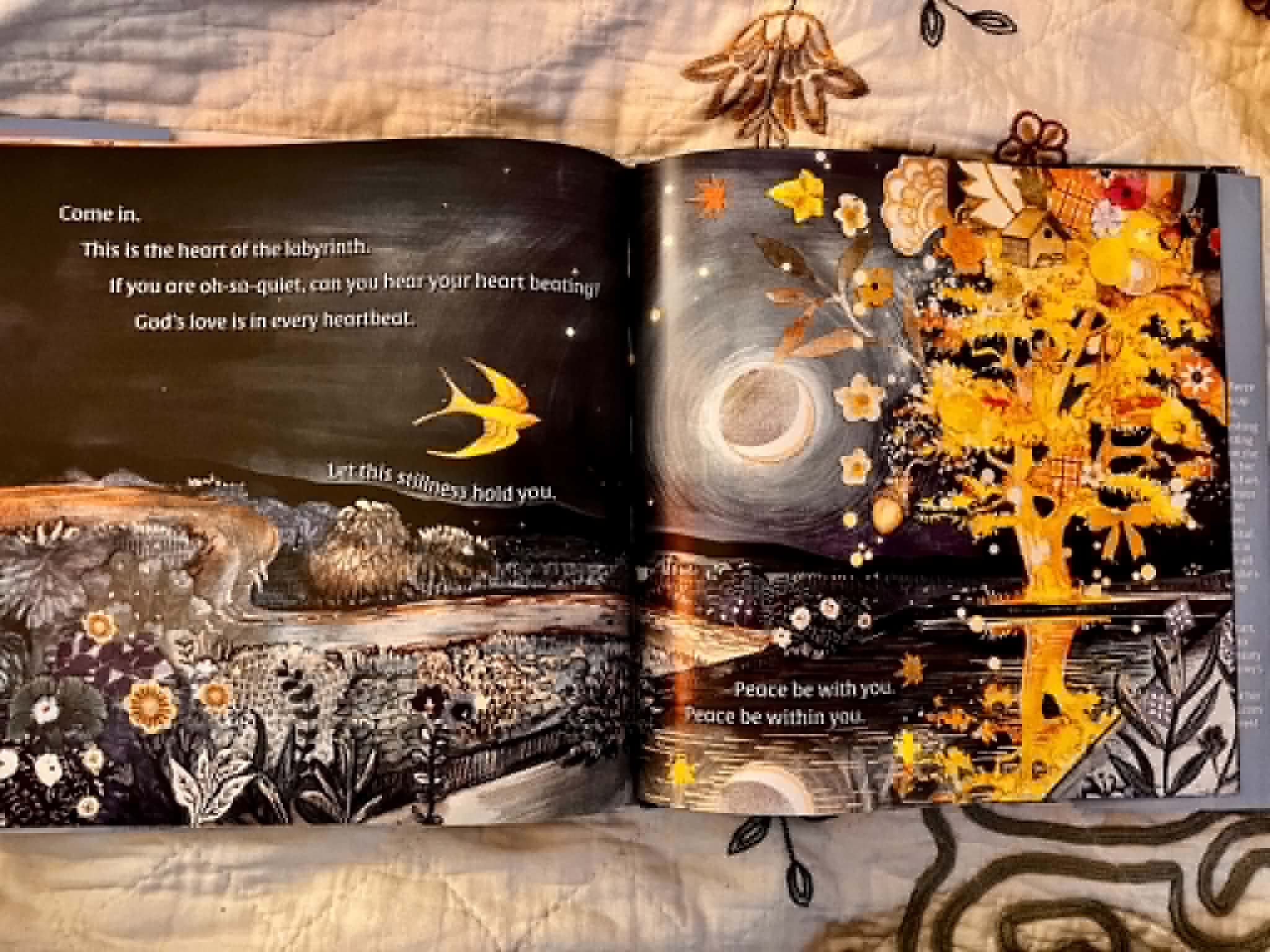
Combined with the breathtaking artwork, it is one of the most powerful moments in the book. Even after multiple readings, this page continues to give me goosebumps. What begins as a simple bedtime story becomes something deeper: a reminder that rest is not merely physical, but spiritual as well. The image of the tree at the center of the labyrinth beautifully reflects the Christian understanding that true peace is found in God’s presence and love.
Who Is This Book For?
According to IVP Kids, The Unwinding Path is designed for children who struggle to calm and quiet themselves at bedtime. After reading it with my own children, however, I found that its appeal extends well beyond that audience. Through the imagery of an ancient Christian labyrinth, interactive finger-tracing exercises, and reminders of God’s presence, the book gently guides children (and the grownups who love them) toward rest.
I think it would make a wonderful gift for young children, new parents, or families navigating bedtime struggles. In particular, I thought of my own ten-year-old daughter, who sometimes wrestles with bedtime anxiety. The book’s gentle reminders of peace, God’s presence, and the value of rest felt especially meaningful in that context. “Big kids” sometimes need those reminders just as much as younger ones.
I also don’t think this book is “too young” for children my daughter’s age. In fact, one thing I appreciated most was how easily it brought my children together despite the gap in their ages. My son was drawn to the finger-tracing activities and winding paths, while my daughter (and I) connected with the symbolism, artwork, and deeper themes. Though they engaged with the book differently, both were captivated by the experience.
And honestly? I would happily give this book to adult friends, especially those who appreciate beauty, wonder, and a creative Christian worldview.
Essentially, I found that while the story is written for children, its themes reach far beyond childhood. The book’s gentle invitation to slow down, be still, and rest in God’s presence feels just as meaningful for weary parents as it does for little readers.
Perhaps that’s what I appreciated most. As much as I enjoyed the book itself, I treasured the experience of reading it together. In a world full of distractions, The Unwinding Path creates space for families to slow down, be present with one another, and share a quiet moment of peace before bedtime.
Final Thoughts
In the end, what makes The Unwinding Path so memorable is that it accomplishes two things at once. It helps children prepare their bodies and minds for sleep, but it also points them toward a deeper kind of rest: one safely nestled in God’s presence, peace, and love.
Through its interactive journey, thoughtful symbolism, and breathtaking illustrations, the book reminds readers that rest is not simply the absence of activity. It is a gift from the Father.
I have already recommended this book to several friends with children, not simply as a bedtime story, but as an experience to share together. If your family is looking for a thoughtful, creative, Christ-centered resource that encourages both wonder and rest, The Unwinding Path is well worth exploring.
A Gentle Invitation to Rest
The Unwinding Path is one of those rare children’s books that does more than hold a child’s attention. It creates a space where parent and child can be still together.
Through its winding paths, gentle prompts, meaningful symbolism, and breathtaking illustrations, it invites families to practice rest, not as an afterthought, but as part of a life rooted in God’s love. It gives children something to do with their hands, something beautiful to notice with their eyes, and something true to carry into sleep: they are safe, loved, and held by God.
For families who struggle with bedtime, children who wrestle with anxious thoughts, or parents who simply want to end the day with more peace and intention, The Unwinding Path is a lovely addition to the family bookshelf. It is quiet, creative, Christ-centered, and deeply comforting.
More than a bedtime story, it is an invitation to slow down and remember that rest is not something we earn after doing enough. Rest is a gift. And sometimes, the simple act of tracing a winding path together can help us receive it.