STEM education has to do with teaching science, technology, engineering, and mathematics. These subjects often cause those who homeschool or who are considering homeschooling to worry that they won’t be able to succeed–that they won’t be able to educate their children well in these subjects. Today, though, teaching these subjects doesn’t have to be a frightening prospect! There are so many great ideas and resources available to us that the real problem is how to narrow them down! Keep reading to learn more about how to promote STEM education in your homeschool and some of the resources you might want to consider using to make it fun and easy for you and your students!
When I was a child, I HATED science. We used textbook-based curriculum that I Just. Didn’t. Get. I don’t know if it was my fault or the curriculum’s fault, but I thought science was the worst subject ever.
Math was not far behind. I liked a few things, but mainly I could have done without it.
We didn’t focus much on engineering in school growing up, but we definitely focused on it during play. I remember constructing some risky implements while we played outside–such as a two-story-high tire swing, stick “weapons,” and a fort made from scrap wood.
Of all the STEM subjects, I was lacking the most in math and science. Unfortunately, you need a strong basic understanding of both of these subjects when pursuing many career paths today. For example, I use a lot of science information while writing from home, and my husband uses math and programming algorithms in the legal field.
I always knew I wanted to focus more on STEM activities for kidswhen our own children reached school age, but with a weaker background in STEM, how does a parent encourage the development of STEM skills? Here is what we have found works for us:
How to Promote STEM Education in Your Homeschool
Jump in with easy activities:
Our kids are still young, so they still learn from the most basic of science experiments (different ingredients make chemical reactions!), but what I love about any STEM activity is that there is always more to learn. You can make any project as simple or as complicated as you like to suit interest and ability level. When we did our nature science walk, Monkey learned about the life cycle of plants, weather patterns, and the scientific names for plants. Bo just learned the difference between a flower and a tree.
Use a kit:
We are still building up our resources for STEM activities, so we don’t have everything for every project yet. We love purchasing kits that come with everything you need for several projects (We like these Young Scientists kits), which really makes things a lot easier.
Learn along with your kids:
I am not super strong in science or math, which means that I often learn things along with Monkey and Bo. When we learned about rocks, I learned how to categorize rocks for the first time, too! When Monkey was learning how to add and subtract larger numbers, I learned a few new tricks. I think it’s really fun to learn along with them!
Allow open-ended learning:
As I mentioned earlier, a lot of our STEM education came through play when I was growing up. My family and I live in an apartment in the middle of the city, which makes building tree forts a little more difficult. But we try to allow our children the freedom to experiment and explore on their own as much as possible. I try to make sure we have plenty of open-ended supplies on hand for spontaneous STEM learning.
Don’t force it:
Part of what made us dive headfirst into STEM was Monkey’s love of science and experimenting. She has a mind that wants to explore and learn about science, so we embrace it. I thought I didn’t like science and math as a child because it felt forced and boring. Fostering a passion for STEM is a delicate balance between providing solid concepts and allowing children to have fun and explore at their own pace.
Make it fun:
Providing a fun way to learn is probably the most important part of early STEM education. A strong base of fun can help kids power through the boring years in high school to get to the other side in college and in future careers.
Here are a few of our favorite STEM-related resources:
Do you promote STEM education in your homeschool? Do you have a background in STEM, or are you winging it like we are?
Brenda is a professional writer and homeschooling mother to two girls in Dallas, TX; with a passion for books, DIY, and creative education. Her blog, www.schoolingamonkey.com, is all about homeschooling, crafts, green living, and fun. Keep up with the fun here!
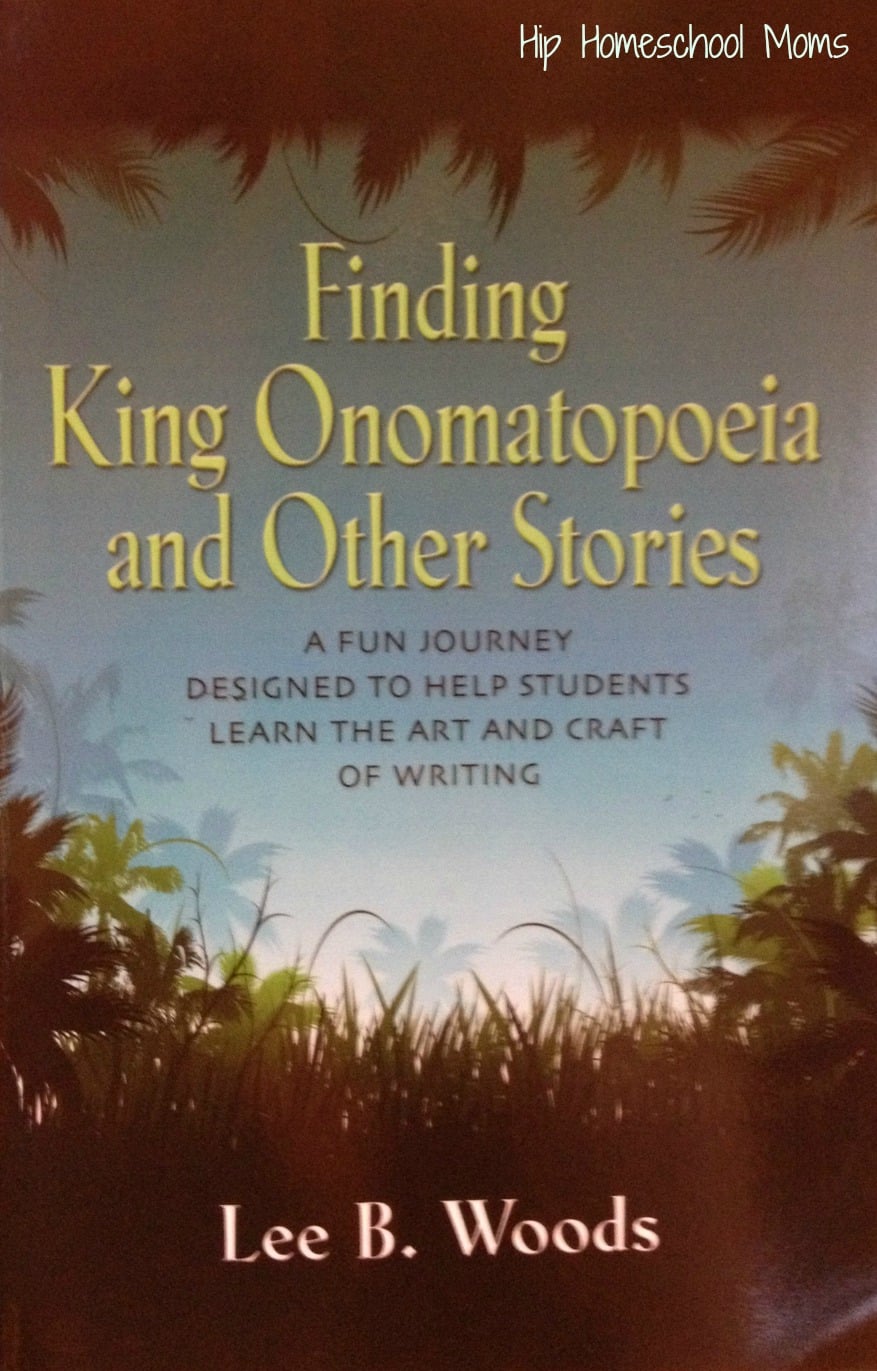
I don’t think I have ever in my life read a book about English grammar that I actually enjoyed! Until now. I recently received Finding King Onomatopoeia and Other Stories: A Fun Journey Designed to Help Students Learn the Art and Craft of Writing by Lee B. Woods. I really truly enjoyed reading this book! I love…
College and scholarships can be scary subjects. We want our kids to have bright futures, and for most of us that means we could use some financial help along the way. So if your child wants to continue her education after being taught by Mom, how can you help her pay for that? I have…
My Hair Can, written by Matt Forte and illustrated by Sophia Green, is a colorful and engaging book that shares a powerful message with children: that we are diverse and unique, and every part of us is carefully made by a loving Creator, including our hair.
I’ve had my eye on Noeo Homeschool Science for several years – ever since I first saw their advertisement in a magazine. I can’t begin to tell you how excited I was when they sent me Chemistry II: Atoms to Alloys and Beyond! in exchange for this review. 🙂 I began reading the Instructor’s Guide…
Since we started homeschooling over 20 years ago, one question has been consistently asked. “What about socialization?” I don’t know if it’s because we’ve been asked SO many times and I’m just tired of it, but it takes everything in my being to keep from being completely irritated. Before I ever had children, I had…
How to Use Homeschool Bible Curriculum for All Learning Styles I have to admit I never really thought much about homeschool Bible curriculum as it relates to my children’s learning styles until I found The Word in Motion! This curriculum is meant for children from kindergarten through about 8th grade. It’s full of all kinds…
3 Comments
Thank you for this posting! We incorporate STEM into our curriculum on a daily basis through on-line programs like E-Learning For Kids (http://www.e-learningforkids.org/) we are currently using their Grade 5 Science and Health Units. We also supplement our Singapore Math with free worksheets from HomeSchoolMath.net and Math4Children – the key to make math work though it to ensure that your kids know their times tables inside out and backwards and forwards. For play, we have the ever present Lego, a mechano set and the absolute favourite Snap Circuitry. We make a lot of use of documentaries on YouTube, watching on astronomy, geology/earth sciences, engineering feats, and scientists. We are blessed here in Newfoundland with an abundance of STEM-directed field trip options ranging from UNESCO World Heritage site like Gros Moraine National Park, to the Insectarium in Deer Lake, to the NALCOR presentation site where the deep sea drilling platform is being built, to the Johnson GEO Centre in St. John’s, to the Mistaken Point Ecological Reserve with all of its fossil beds… the range of geological features is immense. There are also whale and iceberg watching trips and the opportunity to turn other UNESCO World Heritage Site like Red Bay (Labrador) and L’Anse Aux Meadow into naval engineering trips as we examine the actual mechanics of how Vikings and Basque fishermen got to these locations. As you can tell we are equally passionate about incorporating STEM into our daily life.
I was never a big fan of math or science either, whereas my daughter loves numbers and experiments. The funny thing is, I’m learning to question and test things just as much as she is when we do experiments. We really are learning together!










Thank you for this posting! We incorporate STEM into our curriculum on a daily basis through on-line programs like E-Learning For Kids (http://www.e-learningforkids.org/) we are currently using their Grade 5 Science and Health Units. We also supplement our Singapore Math with free worksheets from HomeSchoolMath.net and Math4Children – the key to make math work though it to ensure that your kids know their times tables inside out and backwards and forwards. For play, we have the ever present Lego, a mechano set and the absolute favourite Snap Circuitry. We make a lot of use of documentaries on YouTube, watching on astronomy, geology/earth sciences, engineering feats, and scientists. We are blessed here in Newfoundland with an abundance of STEM-directed field trip options ranging from UNESCO World Heritage site like Gros Moraine National Park, to the Insectarium in Deer Lake, to the NALCOR presentation site where the deep sea drilling platform is being built, to the Johnson GEO Centre in St. John’s, to the Mistaken Point Ecological Reserve with all of its fossil beds… the range of geological features is immense. There are also whale and iceberg watching trips and the opportunity to turn other UNESCO World Heritage Site like Red Bay (Labrador) and L’Anse Aux Meadow into naval engineering trips as we examine the actual mechanics of how Vikings and Basque fishermen got to these locations. As you can tell we are equally passionate about incorporating STEM into our daily life.
These are great tips, thanks!
I was never a big fan of math or science either, whereas my daughter loves numbers and experiments. The funny thing is, I’m learning to question and test things just as much as she is when we do experiments. We really are learning together!